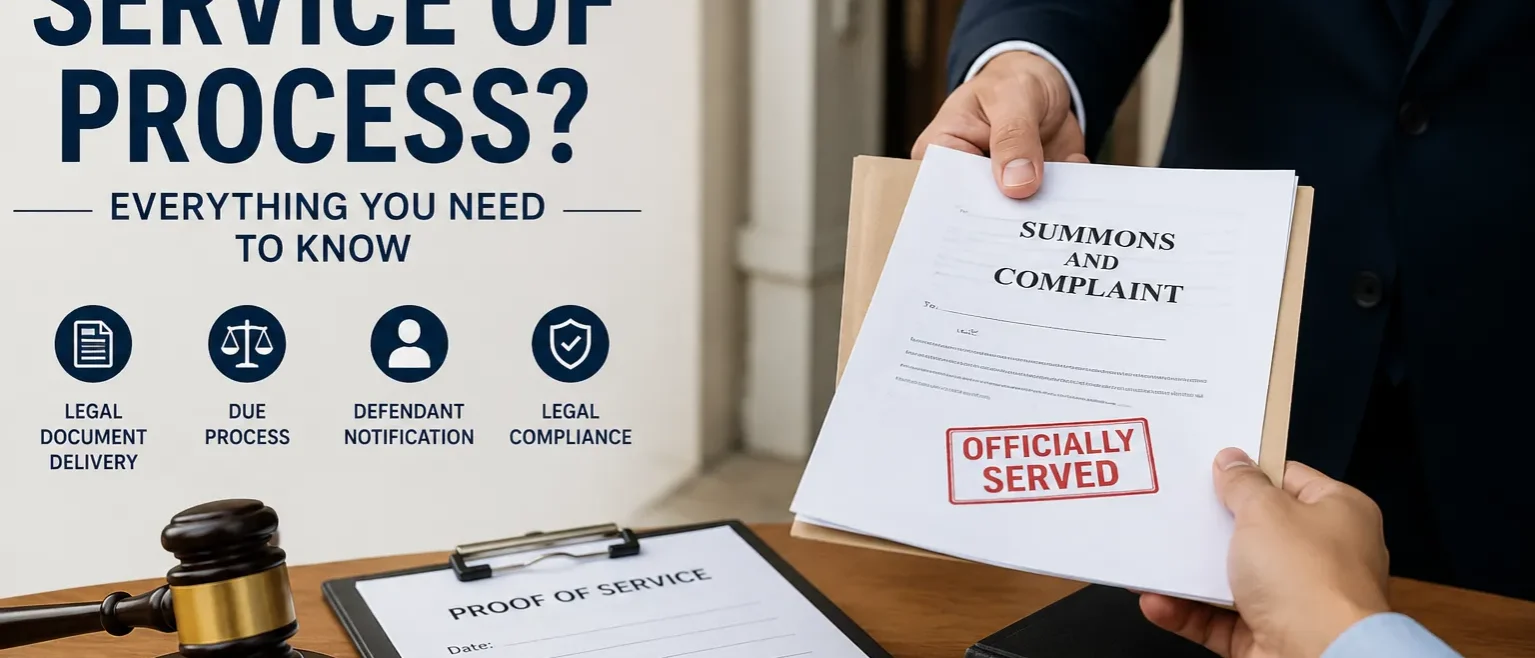
Facing a lawsuit is stressful, but the legal process cannot begin until the person being sued receives the required court documents. That is why service of process plays an essential role in every legal case.
Service of process formally delivers legal documents to notify a person that a lawsuit has been filed against them. As a result, the defendant has the opportunity to respond, and the court can move the case forward. Once you understand this process, the legal system becomes much easier to navigate.
Understanding how service of process works helps make the entire legal process less confusing.
What is Service of Process?
Service of process officially delivers legal documents to a person involved in a lawsuit. It allows the plaintiff to notify the defendant about the legal action while giving the defendant a fair opportunity to respond.
Before the court can proceed with the case, the plaintiff must serve the defendant with the initial court documents. These documents include the summons and the complaint. The summons informs the defendant that a lawsuit has been filed and explains when and where they must respond or appear. Meanwhile, the complaint outlines the plaintiff’s claims and the legal relief they are seeking.
Service of process provides formal notice of the lawsuit and protects every party’s right to due process under the law.
Why is Service of Process Required
Service of process ensures fairness throughout the legal system. First, the law requires the plaintiff to notify the defendant before moving forward with a lawsuit. In addition, every defendant has the right to understand the legal action and prepare a response.
Due process guarantees every person the right to receive notice and present their side of the case before the court reaches a decision. Therefore, proper service gives the court authority to hear the case. Without proper service, the court cannot issue a valid judgment or continue with the legal proceedings.
It ensures:
- The defendant knows a lawsuit has been filed.
- The defendant has the opportunity to respond and defend themselves.
- The court has jurisdiction over the defendant.
- The legal process remains fair and transparent.
Types of Service of Process
Personal service is the preferred method because a process server personally delivers the court documents to the defendant. Therefore, courts consider this the most reliable form of service and require it for the initial summons and complaint in most cases.
Service by mail allows legal documents to be sent through first-class mail after the defendant receives the initial court papers. Additionally, some states allow service by mail for the initial documents if the defendant agrees to accept them.
Substituted service provides an alternative when a process server cannot complete personal service despite making reasonable efforts. In this situation, the process server leaves the documents with a responsible adult at the defendant’s home or workplace and then mails another copy to the defendant.
Service by publication applies when the defendant’s location is unknown. In those cases, the court may allow notice to be published in a newspaper. This method is generally used for property-related matters or family law cases, such as divorce.
Nail and mail involves posting the legal notice on the defendant’s door and mailing another copy to the same address. This method is available only when personal service is not possible and state law permits it.
Who Can Serve Legal Papers
The rules vary by jurisdiction. But generally, serving legal papers must be done by someone who is:
– At least 18 years old
– Not a party to the lawsuit
– Authorized by the court or law
Professional process servers are often hired for this job. They are experienced in locating people and delivering documents properly.
Some jurisdictions allow sheriffs or other court officers to handle service of process. But private companies are commonly used for efficiency. Service of process requirements also include language considerations. In some jurisdictions, documents must be in a language the defendant can understand to satisfy due process.
What Is Proof of Service
A process server files a proof of service with the court to confirm that they delivered the legal documents. This court document records the date, time, location, and method of service. The process server signs it under penalty of perjury to verify that they completed the service correctly. The court relies on this document as the official record of proper service. Without a valid proof of service, the court cannot move the case forward.
For international cases, it must also show compliance with treaties like the Hague Service Convention.
How Does Service of Process Work for International Cases
The Hague Service Convention governs service between member countries.
When serving someone in another country, documents must go through the designated Central Authority in that country. For China, this is the Ministry of Justice. Personal service or mail service is not accepted.
Translation is also required. Most countries require that the recipient receives documents in their official language. A certified translation of all legal documents is mandatory.
The process is slower and more formal. But it ensures that it is legally valid and the judgment can be enforced internationally.
Service of Process in the Civil Lawsuit Process
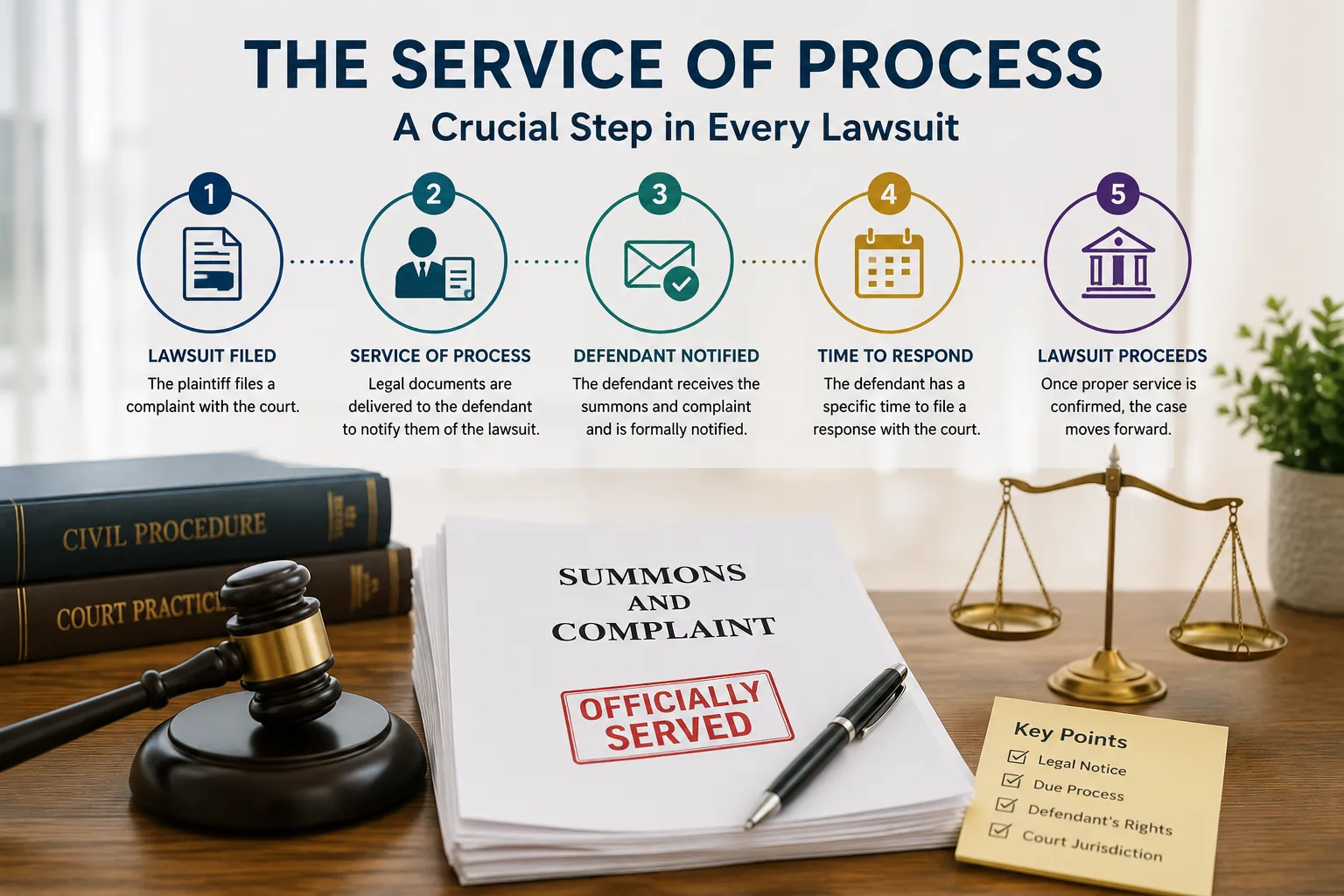
The civil lawsuit process begins with filing a complaint. The defendant is notified and given a chance to respond.
The summons and complaint are the first documents served. The summons commands the defendant to appear or answer. The complaint explains what the lawsuit is about.
After process, the defendant files an answer or other response. This is where the litigation timeline officially begins.
Conclusion
Service of process is the legal bridge between filing a lawsuit and actually starting it. It notifies the defendant and protects their rights. Without proper service, the court cannot proceed.
Understanding it helps take the mystery out of legal proceedings. It is not a punishment. It is just the process of making sure everyone knows what is happening and has a fair chance to respond.
Frequently Asked Questions
What is service of process?
Service of process officially delivers legal documents to notify a person that someone has filed a lawsuit against them. It informs them about the legal action and gives them the opportunity to respond within the required time.
Why is service of process required before a court can hear a case?
The court cannot act without proof that the defendant knows about the lawsuit. This is required by due process. Without proper service, any judgment would be invalid.
What documents are typically served as part of service of process?
The summons and complaint are the primary documents. The summons is a court order to appear or respond. The complaint explains what the lawsuit is about and what the plaintiff wants.
Who can legally serve legal papers?
Any adult who is at least 18 years old, is not a party to the case, and meets the court’s legal requirements can legally serve court papers. Many individuals and law firms hire professional process servers to deliver legal documents accurately and comply with applicable service rules.
What happens if service of process is not completed properly?
The defendant can challenge the service. If the court agrees it was defective, the lawsuit may be dismissed. The plaintiff would have to start over with proper service.
What is proof of service?
A process server files this court document to confirm that they successfully delivered the legal papers according to the required legal procedures. It states the date, time, location, and method of service under penalty of perjury.
Can You Serve Legal Papers by Mail?
Yes, the law allows service by mail in certain situations. However, courts generally prefer personal service and often require it for the initial summons and complaint. After the defendant receives the initial legal papers, parties can usually serve most later court documents by first-class mail.
How Do You Serve Someone Who Cannot Be Found?
If a process server cannot locate the defendant after making reasonable efforts, the court may authorize service by publication. In this method, the plaintiff publishes a legal notice in an approved newspaper. Courts usually allow this option only in limited circumstances, such as cases involving property, family status, or when no other method of service is available.
What Are the Requirements for Service of Process in International Cases?
Many international cases follow the Hague Service Convention when the destination country participates in the treaty. The plaintiff must submit the legal documents through the country’s designated Central Authority. Many jurisdictions also require translated copies of the documents before they will complete service.
How long does someone have to respond after being served?
Typically 20 to 30 days, but this varies by jurisdiction and type of case. The summons will state the specific deadline.