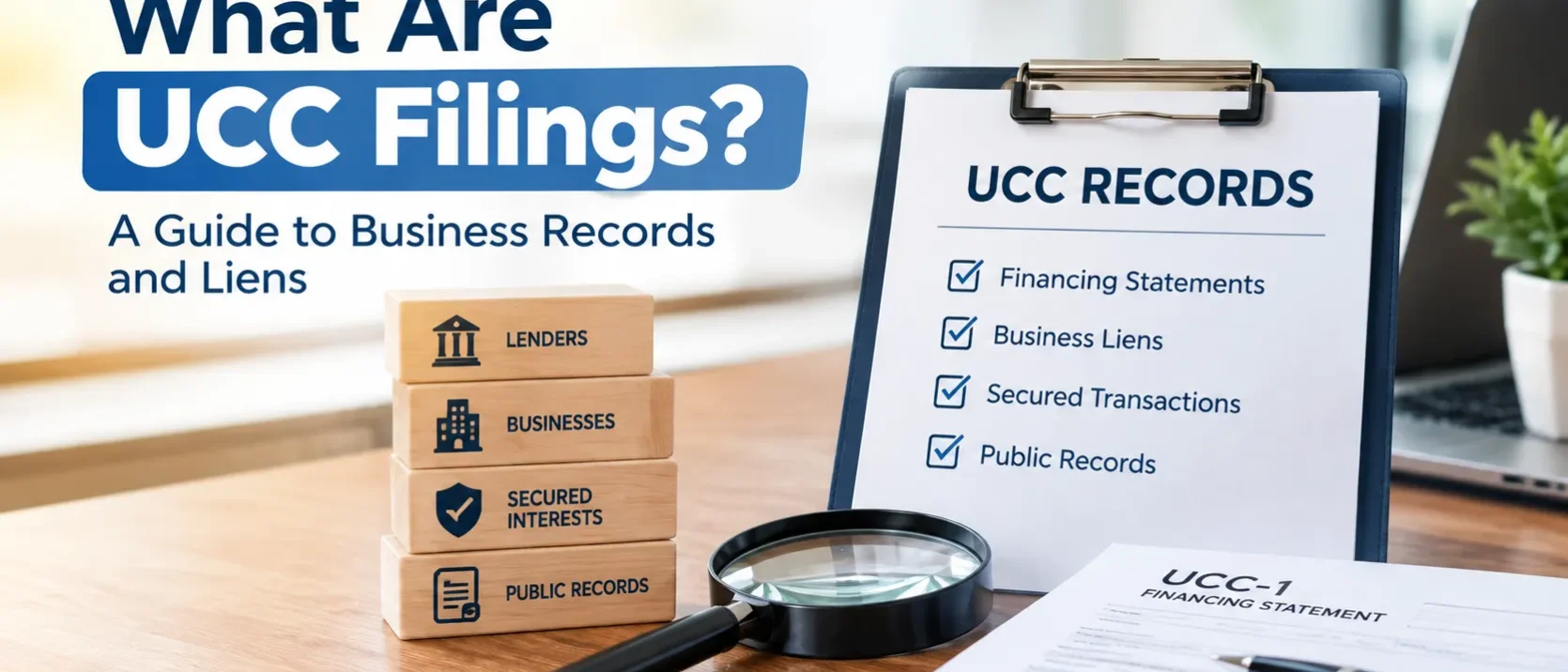
What are UCC filings? They are public records that notify others that a lender may have a legal interest in a business’s personal property used as loan collateral. These records are common in business financing and help lenders identify existing claims before approving another loan.
For example, a company borrows money to purchase equipment. The lender may file a financing statement to notify other creditors that the equipment serves as collateral.
Understanding what UCC filings are helps business owners review existing obligations and prepare for future financing.
What Does UCC Stand for in Banking?
UCC stands for Uniform Commercial Code, a set of laws governing commercial transactions across the United States. Article 9 covers secured transactions involving personal property.
In business finance, UCC records commonly relate to:
- Equipment and machinery loans.
- Inventory financing.
- Accounts receivable financing.
- Working capital loans.
These filings provide public notice of a claimed security interest but do not automatically indicate missed payments or financial trouble.
What Is a UCC Financing Statement?
A UCC financing statement, usually Form UCC-1, notifies the public that a creditor claims an interest in specified collateral.
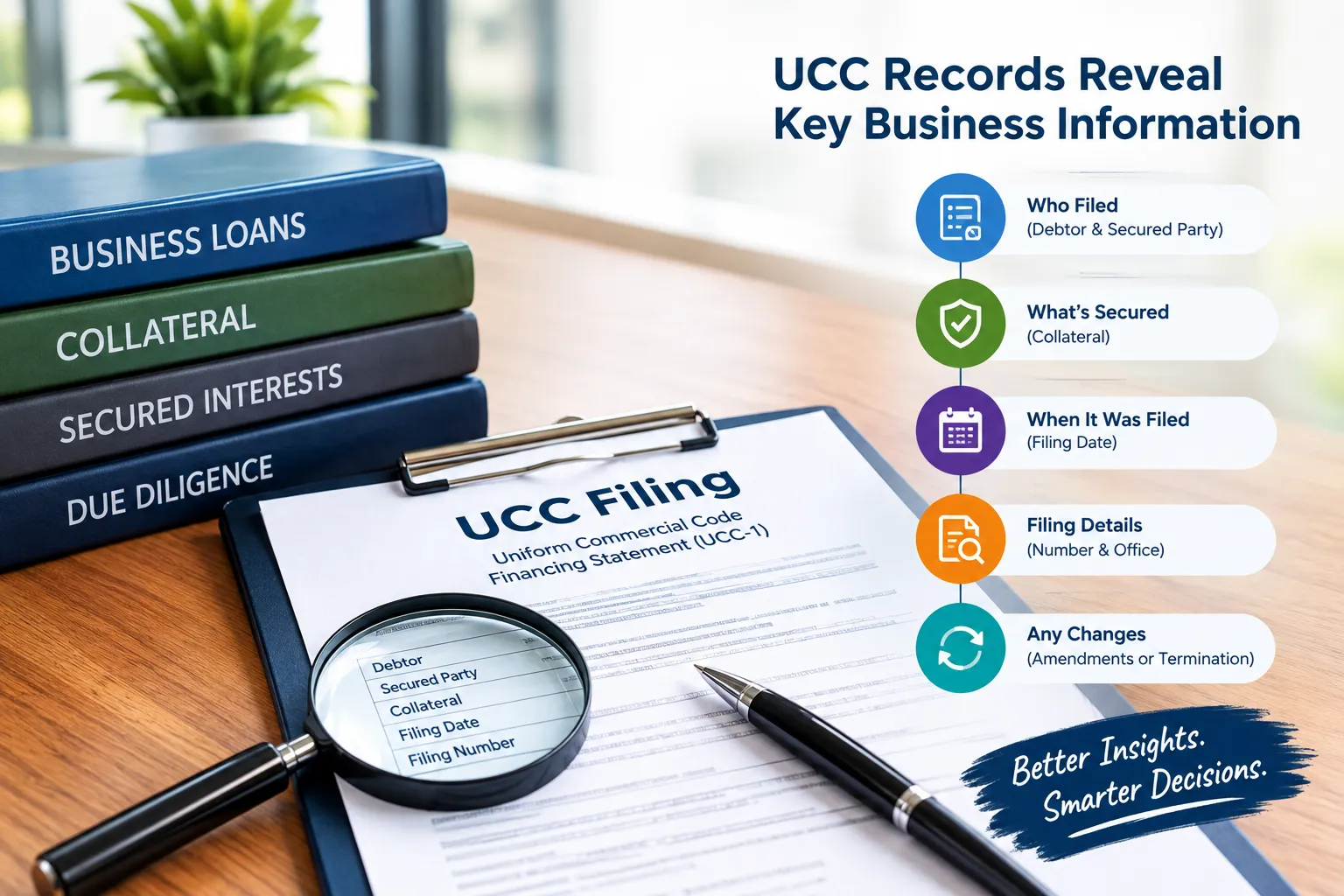
A typical filing includes:
- Debtor: The person or business receiving financing.
- Secured party: The lender or creditor.
- Collateral: The assets covered by the security interest.
- Filing details: The filing number, office, and date.
A financing statement differs from a loan agreement, which contains the terms agreed upon by the borrower and lender.
What Is a UCC-1 Lien?
A UCC-1 lien is a common term for a security interest associated with a UCC-1 financing statement.
For example, a restaurant may finance commercial kitchen equipment. The lender may take a security interest in that equipment and file a financing statement to notify other creditors.
The filing does not automatically mean the borrower has defaulted. It may simply reflect a normal business loan.
What Is a UCC Blanket Filing?
A UCC blanket filing covers a broad range of business assets rather than one specific item. Depending on the agreement, these assets may include inventory, equipment, and accounts receivable.
Before accepting a blanket lien, business owners should consider:
- Whether it could limit future borrowing options.
- Which assets are included in the collateral.
- What happens if the borrower defaults.
- When the lender must release its security interest.
Reviewing the agreement carefully can help prevent financing problems later.
How to Read a UCC Filing
When learning how to read a UCC filing, focus on the following details:
| Filing detail | What it means |
| Debtor name | Business or individual linked to the filing |
| Secured party | Creditor claiming an interest |
| Filing date | Date the record was submitted |
| Collateral | Assets covered by the filing |
| Amendments | Changes to the original record |
| Termination | Notice that the filing has ended |
Check the debtor’s legal name and collateral description carefully. Related amendments and termination records can provide important additional information.
What Are the UCC Filing Requirements?
UCC filing requirements depend on the transaction, collateral, and applicable state law.
Common requirements include:
- Providing the correct legal name of the debtor.
- Identifying the appropriate filing office.
- Describing the collateral sufficiently.
- Submitting the required form and fee.
- Tracking the filing’s effective period.
Many standard financing statements remain effective for five years unless properly continued or otherwise affected by law. Specific exceptions may apply.
How Does a Michigan UCC Filing Work?
A Michigan UCC filing is submitted to the appropriate state or county office, depending on the transaction and collateral.
Many business-related financing statements are filed with the Michigan Department of State. Certain fixture-related interests may require county-level filing.
Check current fees and filing instructions before submitting documents.
How Can a UCC Filing Be Removed?
A filing may need to be terminated when the underlying security interest has ended and applicable legal requirements are satisfied.
Business owners should:
- Confirm the loan has been paid.
- Contact the lender about releasing the collateral.
- Request the appropriate termination when required.
- Check public records for updated information.
- Seek legal advice if a filing is inaccurate or disputed.
Paying off a loan does not necessarily remove the public record immediately.
Understanding what are UCC filings helps businesses recognize existing claims and address outdated records before applying for additional financing.
Frequently Asked Questions
What are UCC filings used for?
What are UCC filings used for in business lending? They notify the public that a creditor claims a security interest in specified assets. Other lenders can review these records before deciding whether to provide financing.
Does a UCC filing affect business credit?
A filing does not automatically lower a business’s credit score. However, lenders may consider existing liens when evaluating financing applications, available collateral, and the company’s ability to take on additional debt.
How long does a UCC filing last?
Many standard UCC financing statements remain effective for five years. A continuation may extend the filing when completed correctly and within the required period. Applicable rules can vary by transaction.
Can a business get another loan with a UCC lien?
Yes. Approval depends on the lender’s requirements, the assets available as collateral, existing loan agreements, and the business’s financial position. Some lenders may require consent from an existing secured creditor.
What is the difference between UCC-1 and UCC-3?
UCC-1 is used to provide initial notice of a claimed security interest. UCC-3 can amend an existing filing, continue its effectiveness, record an assignment, or terminate it when appropriate.
Does a UCC filing mean a business has defaulted?
No. A filing often reflects an ordinary financing arrangement. It does not establish whether payments are current, whether the borrower has defaulted, or how much debt remains outstanding.
How can a business search for UCC filings?
Businesses can search the relevant state’s official database using the debtor’s correct legal name. Reviewing collateral descriptions, amendments, and termination records helps identify relevant claims.
Can a UCC lien be removed after repayment?
A filing may be terminated after the applicable requirements are met, often through a UCC-3 termination statement. The borrower should confirm the lender’s obligations and verify that the public record has been updated.
What does a blanket UCC lien cover?
A blanket lien may cover several categories of business property, including inventory, equipment, and accounts receivable. The exact coverage depends on the security agreement and applicable law.
Where can Michigan UCC records be searched?
Michigan UCC records can be searched through the official Michigan Department of State UCC services. The website provides information about filing procedures, record searches, fees, and financing statement updates.