
Need records from a company that is not involved in your California case? A subpoena for business records can help you obtain invoices, contracts, payment records, communications, and other evidence held by a third party. However, an unclear request or missed notice deadline can delay production and create avoidable problems.
There are several things that you may want to consider, including which form to use, how to describe the records, when to serve the subpoena, and what notices may be required. Additionally, California has specific requirements regarding consumer and employee records.
What is a Subpoena for Business Records in California?
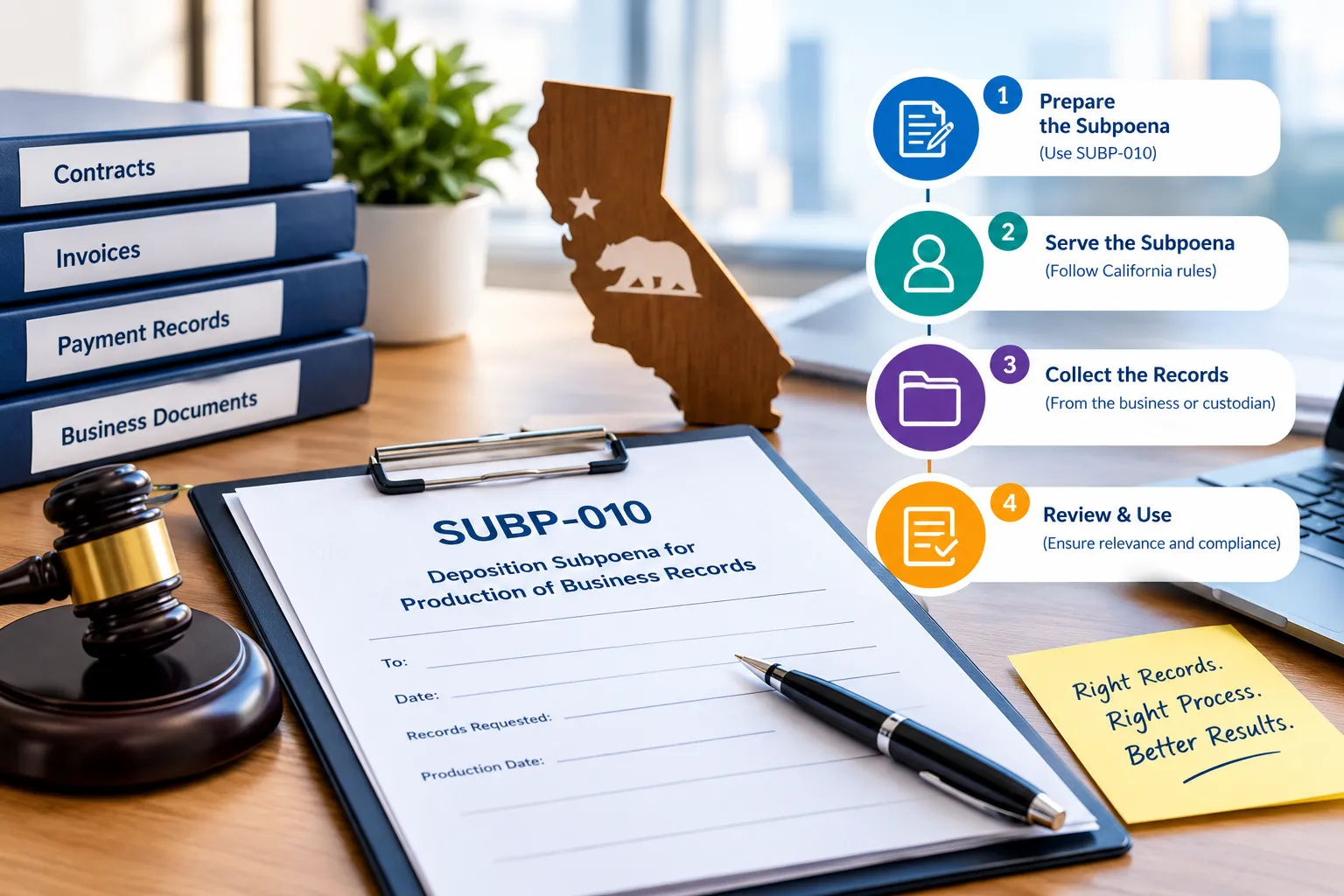
A subpoena for business records is a request that compels a business or witness to produce documents or to make documents available for copying. California’s SUBP-010, Deposition Subpoena for Production of Business Records, is used for requesting records only.
The documents can include invoices, contracts, payment information, letters, employment records, and any other documents in any format. SUBP-010 can be used to specify how or where the documents should be produced.
When Do You Need a California Business Records Subpoena?
A subpoena for business records is issued when relevant documents are in the possession of a business or a third party. For example, a company that possesses financial, customer, employment, or transaction records relating to the dispute may be ordered to produce them.
Before drafting the subpoena, make a list of the needed documents and identify the witnesses who have the documents and the time frame during which the documents were created.
How to Issue a Subpoena to Produce Business Records
Step 1: Identify the records
Begin by identifying the documents that you are requesting. Provide as much detail as possible, including dates, names, account numbers, and any other information that can help the business identify the documents.
Step 2: Choose the correct form
The California form SUBP-010, Deposition Subpoena for Production of Business Records, should be used for requesting production of business records only. Subpoena preparation can help ensure that the requested records, witness information, and production details are properly identified. A recorded subpoena is different from a subpoena to testify.
Step 3: Set the production date
The production date should be set in accordance with California’s rules for issuing and serving subpoenas. According to California Courts, the production date “must be at least 20 days after issuance or 15 days after service, whichever is later.”
How to Serve a Subpoena for Business Records
A subpoena for business records must be properly served on the business or on the witness who has the documents. Subpoena service must follow the applicable California requirements, including properly identifying the person or entity receiving the subpoena. Hand delivery is the preferred method of service, but specific rules apply depending on the situation and on the type of entity that is being served.
If the business being served is a corporation or a limited liability company, make sure that the correct person or entity is being served. After the subpoena has been served, complete and retain a proof of service form.
What Happens After the Subpoena Is Served?
After the subpoena is served, the business may produce the requested records or raise an objection. The records may be delivered to the deposition officer or made available for copying, depending on the subpoena.
Common Mistakes to Avoid
- Being too broad: Request specific records and dates.
- Using the wrong subpoena: Records-only requests differ from testimony subpoenas.
- Ignoring protected records: Consumer and employee records may require notice.
- Serving the wrong recipient: Confirm the correct contact or agent.
- Missing deadlines: Allow enough time for notice and production.
Conclusion
A subpoena for business records requires specificity and compliance with several requirements. Always consult the current California rules or seek legal counsel if you encounter questions or problems with the subpoena. Before submitting a request, make sure that your records are identified, and the recipient is specified.
Frequently Asked Questions
What is a subpoena for business records?
A subpoena for business records requires a business or third party to produce documents or to allow documents to be copied. SUBP-010 is California’s form for a deposition subpoena for production of business records.
What is a business records subpoena used for?
A business records subpoena is used to request relevant documents from a business or a third party. Examples of such documents are invoices, contracts, payment records, letters, and any other documents.
What is a deposition subpoena for production of business records?
The business records subpoena form for California is SUBP-010, Deposition Subpoena for Production of Business Records.
How specific should a California business records subpoena be?
The business records subpoena should specifically describe the documents that are being requested. Always include any relevant dates, names, account numbers, and transaction details.
Do consumer records require special notice?
Yes, consumer records do require special notice. The consumer must be notified before the subpoena is issued to the business that has possession of the records.
Do employee records require special notice?
Yes, Employee records also require special notice. Again, the employee must be notified before the subpoena is issued.
Can a business object to a subpoena?
Yes, a business can object to a subpoena. The objections can be based on a variety of reasons, from the protection of the privacy of the documents to the privileges that apply to certain categories of documents.
How long does a business have to respond?
The response to a subpoena for production of business records can be based on the 20-day or the 15-day rule. Consumer and employee records may require additional notice periods.
What is a subpoena for production of business records?
A subpoena for production of business records refers to a subpoena that requires a business to produce documents. This is the type of subpoena that is governed by form SUBP-010 in California.
Do I need a lawyer to subpoena business records?
It is not necessary to have a lawyer in order to subpoena business records. However, legal counsel can be of assistance in situations where the subpoena involves consumer or employee records, objections, or enforcement.