Filing court documents is an important part of any legal case. Whether you are submitting a motion, complaint, or other paperwork, choosing the right filing method can save time and help you avoid unnecessary delays.
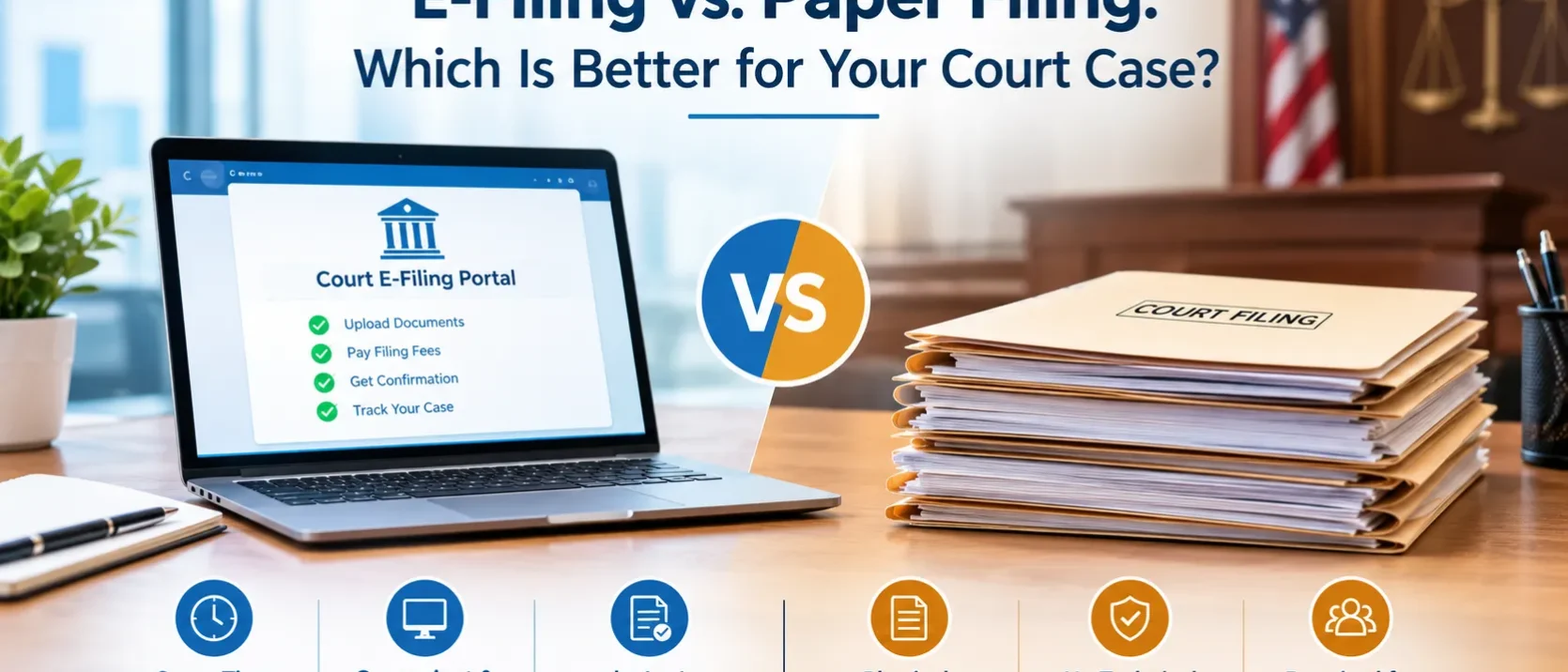
Today, many courts offer electronic filing, while others still accept traditional paper documents. Understanding E-filing vs. paper filing can help you decide which method works best for your case.
What Is Electronic Court Filing?
Electronic court filing, commonly called e-filing, allows attorneys and approved users to submit legal documents through an online court system.
Instead of printing paperwork and delivering it to the courthouse, users upload documents electronically. The system may also provide filing confirmations, payment options, and updates about submission status.
The electronic court filing process usually involves:
- Creating an account with the court’s filing system.
- Selecting the correct court and case.
- Uploading documents in the required format.
- Paying applicable filing fees.
- Submitting the documents and checking for confirmation.
The exact steps depend on the court and its filing platform.
What Is Traditional Court Filing?
Traditional court filing involves preparing physical documents and submitting them to the court clerk. Depending on local rules, documents may be delivered in person or sent by mail.
This method is still used in some courts and for certain types of filings.
The traditional court filing process generally includes printing and signing documents, preparing copies, completing required forms, and delivering the paperwork before the deadline.
E-Filing vs. Paper Filing: Key Differences
Both methods serve the same purpose, but they differ in how documents are prepared, submitted, and tracked.
| Feature | E-Filing | Paper Filing |
| Submission | Online | In person or by mail |
| Speed | Often faster | May take longer |
| Availability | Depends on court system | Depends on clerk’s office hours |
| Confirmation | Electronic receipt | Physical stamp or receipt |
| Document format | Usually digital files | Printed documents |
| Storage | Electronic records | Physical files |
| Convenience | Can often be done remotely | Requires delivery |
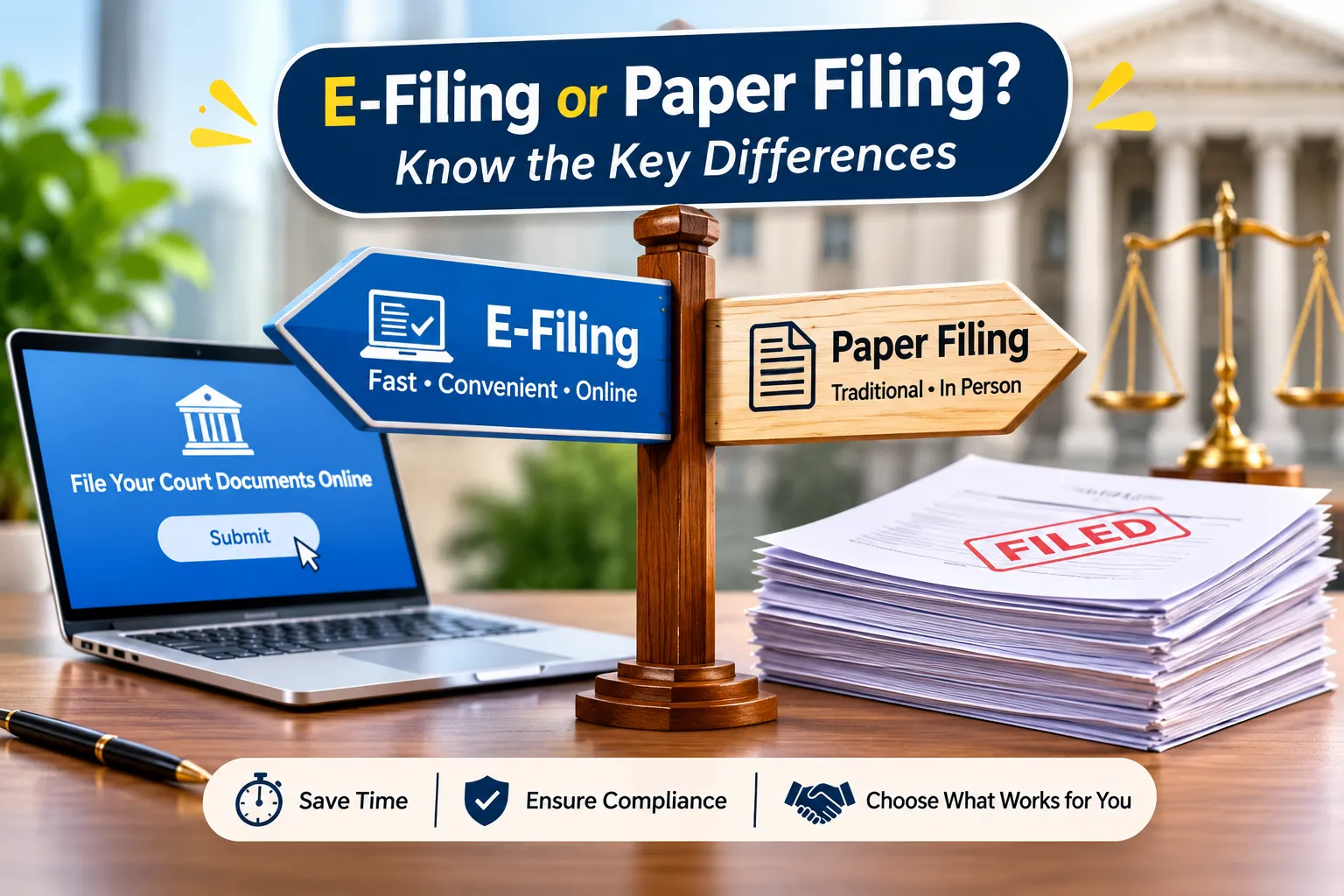
The main difference between e-filing and paper filing is convenience. Electronic filing can reduce travel and paperwork, while traditional filing may be necessary when online submission is unavailable or not permitted.
Benefits of Electronic Court Filing
Electronic filing offers several advantages for attorneys, law firms, and eligible self-represented individuals.
- Saves time: Documents can be submitted without traveling to the courthouse.
- Provides confirmation: Filing systems generally issue electronic receipts.
- Improves access: Users can often submit documents outside normal courthouse hours, subject to system availability and court deadlines.
- Reduces paperwork: Digital records are easier to organize and retrieve.
- Simplifies communication: Some systems provide electronic notices and case updates.
These benefits make e-filing a practical option for many routine court submissions.
Disadvantages of Electronic Court Filing
Although convenient, electronic filing is not perfect.
Some common challenges include:
- Technical problems or system outages.
- File size and document formatting restrictions.
- Difficulty using the platform without technical experience.
- Rejected submissions due to incorrect information.
- Limited access for people without reliable internet or suitable devices.
Users should also remember that uploading a document does not always mean it has been accepted by the court. Always check the filing status.
Benefits and Limitations of Paper Filing
Paper-based court document filing can still be useful when electronic filing is unavailable or when court rules require physical documents.
Benefits include:
- No need for an online filing account.
- Physical copies can be stamped as proof of submission.
- Useful for people who are less comfortable with digital systems.
Limitations include:
- Travel or mailing expenses.
- Printing and copying costs.
- Longer processing times in some situations.
- Greater risk of misplaced or damaged paperwork.
Electronic Court Filing Requirements
Before submitting documents online, check the court’s specific electronic court filing requirements. These may include:
- Creating an approved filing account.
- Using accepted file formats, often PDF.
- Following document naming and formatting rules.
- Providing case numbers and party information.
- Paying required filing fees.
- Meeting electronic signature requirements.
Some courts also restrict who can submit certain documents electronically. Requirements vary by jurisdiction, so always review the court’s official instructions.
Before choosing, confirm which court document submission methods are permitted for your case.
Conclusion:
Choosing between E-filing vs. paper filing comes down to court rules, convenience, and the type of documents being submitted. Electronic filing can save time and simplify recordkeeping, while paper filing remains useful in certain situations.
Whichever method you use, check the filing instructions carefully, keep proof of submission, and make sure every document reaches the court before the deadline.
Frequently Asked Questions
Is e-filing faster than paper filing?
Often, yes. Electronic filing avoids travel and mailing, although court review and acceptance may still take time.
Can individuals file court documents electronically?
Many courts allow self-represented individuals to e-file, but rules vary by jurisdiction and case type.
What happens if an e-filed document is rejected?
The court may provide a reason for rejection. You may need to correct the document and submit it again, so check deadlines carefully.
Is paper filing still accepted by courts?
Yes. Some courts and certain case types still allow or require paper submissions.
What documents can be submitted electronically?
Depending on court rules, users may be able to submit complaints, motions, responses, notices, and other case documents.
Do I need a special account for electronic court filing?
Usually, yes. Most court e-filing systems require users to register before submitting documents.
Does e-filing mean my document is automatically accepted?
No. Submission and acceptance are different. Always check the court’s confirmation and filing status.
Are there fees for electronic court filing?
Some courts charge filing fees or service fees. The amount depends on the court and type of submission.
What is the biggest disadvantage of paper filing?
It can take more time and effort because documents must be printed, copied, and physically delivered or mailed.
How can I avoid missing court filing deadlines?
Review court rules early, prepare documents in advance, allow time for technical or delivery problems, and keep proof of submission.