Records that can be subpoenaed may include medical bills, bank statements, business records, emails, employment information, and other records. At the same time, specific factors relating to relevance, and other issues can restrict the ability to acquire documents by subpoena. These factors need to be carefully considered by the person issuing a subpoena or asked to provide documents in response to a court order.
This guide covers information about the records that may be subpoenaed, which documents are privileged and restricted, requesting documents, and the considerations for people who are served subpoenas for document.
What Records Can Be Subpoenaed in a Legal Case?
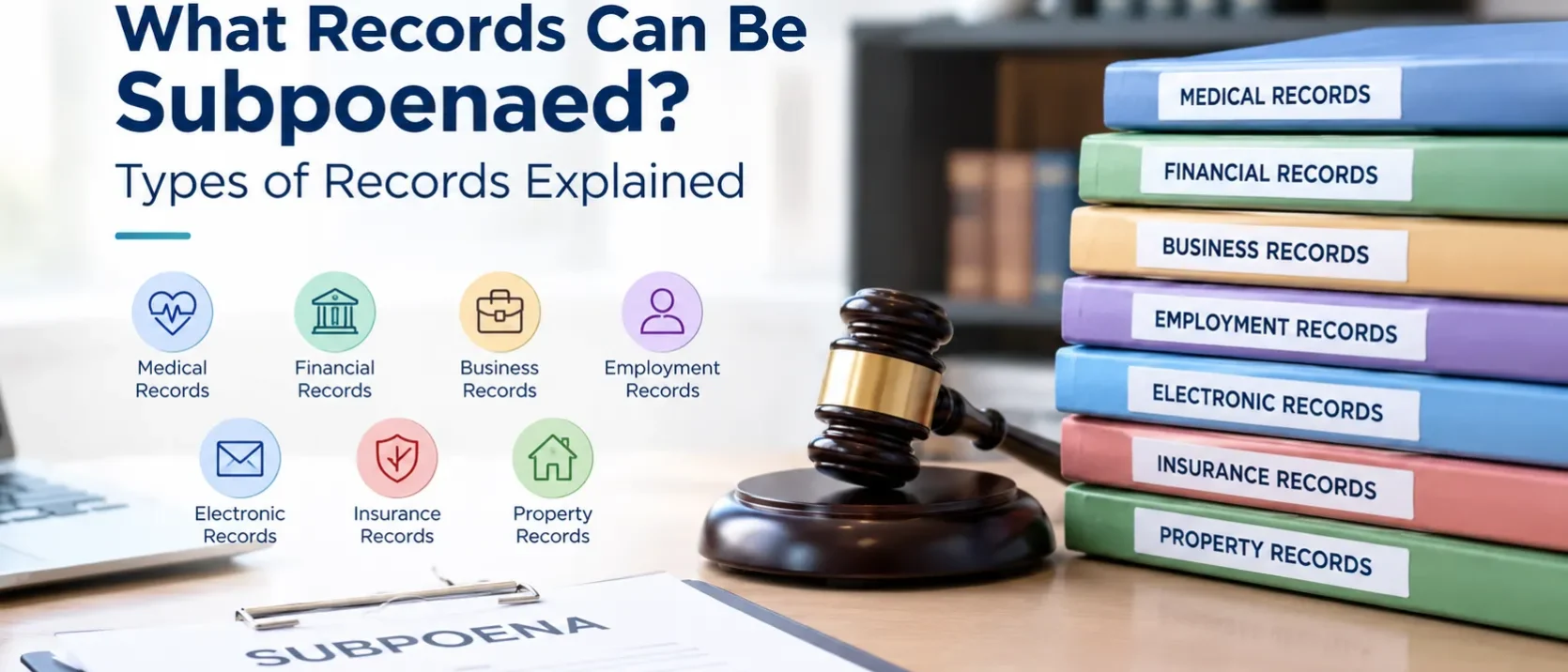
A subpoena may require that a person or an entity provide particular documents or materials that are relevant to the subject of litigation currently pending in the court. The records that can be subpoenaed include medical, financial, business, employment records, insurance, property, and other documents relevant to the judicial proceeding.
Each category may include further subdivisions. For instance, medical records may consist of treatment-related notes or other information, and financial records may include transactions, banking history, and similar details. The factors that apply when a request for documents is issued should be examined to determine what materials can be acquired through a subpoena.
Common Types of Records That Can Be Subpoenaed
Some areas of documents and records that can be subpoenaed include:
- Medical records: treatment notes, test results, medical billing, and records related to treatment.
- Financial records: Bank statements and other documents, including letters of credit, billing, and repayment agreements.
- Business records: Contracts, agreements, invoices, and other relevant documents
- Employment records: Wage records, attendance, and other relevant materials.
- Electronic records: Emails, SMS, and other documents.
- Insurance records: Insurance-related records, payments, policies.
- Property records: Records, evaluations, and other documents relevant to property transactions.
The choice of documents acquired through a subpoena depends on the specific litigation and subjects, and time limits for the request for documents.
What Records Can Be Requested With a Subpoena?
A subpoena for records can include several specific items of information to be produced by a witness or a third party not involved in litigation but having access to documents relevant to the case. For example, disputes relating to a contract’s terms may be resolved via contract, invoices, payments, and other documents. In such a case, a subpoena for documents to get the needed information for litigation does not specify what materials are necessary, and thus it may be challenged as too broad.
Are All Requested Records Automatically Disclosed?
No. Some records may have legal protections that prevent or limit disclosure.
Certain restricted categories of materials require further authorization or considerations. For example, documents and communications protected by privileges, including attorney-client privilege, and medical information protected by medical confidentiality and other restrictions, may require additional grounds for disclosure.
How Does a Subpoena for Records Work?
The process generally involves these steps:
- Identify the records: Documents and materials relevant to the subject of litigation and available with the respondent should be identified.
- Prepare the subpoena: The requested materials should be clearly described, including the specific documents, categories of records, relevant subjects, and applicable time periods.
- Serve the subpoena: The procedure for serving a subpoena typically depends on the applicable law and the jurisdiction.
- Review the request: The recipient determines what must be produced.
- Respond or object: Documents and materials should be produced, and objections raised if a subpoena is not properly issued or is irrelevant and overly broad.
- Review the documents: Review the produced documents to ensure that they are relevant and can be used for the litigation or the case.

Medical Records Subpoena vs. Financial Records Subpoena
Medical Records Subpoena
A medical records subpoena may indicate that medical professionals or facilities should produce documents, including test results, bills, and other information. Several specific factors affect the production of medical records or similar materials. First, the confidentiality of medical information restricts the ability to disclose such records. In some cases, certain information may be deleted or redacted, and the applicable rules may depend on the jurisdiction and the nature of litigation.
Financial Records Subpoena
A financial records subpoena affects the ability to request and produce bank statements, transactions, and other financial records. In cases when these documents and materials are relevant to litigation, a subpoena can be issued to obtain these records. Similar considerations apply when this request is issued because of the restrictions on disclosing financial and related information.
When Can a Business Records Subpoena Be Used?
A business records subpoena that can be issued typically consists of a request for documents and materials that are relevant to litigation. The categories of such materials are numerous, and the most common ones include contracts and other documents evidencing agreements, invoices, accounting and bookkeeping materials, payroll records, and other documents. Finally, if it is a dispute between businesses or other entities, the terms and conditions of any contracts between them may be of relevance.
Example of a Business Records Request
In a contract dispute, one party might request the signed agreement, related invoices, payment records, and emails about the transaction.
A subpoena for documents should clearly identify the requested records and, when appropriate, the relevant time period.
What Happens After Records Are Subpoenaed?
The materials subpoenaed should be examined, and the time limits for response should also be considered. In particular, any restrictions on the production of materials identified, and objections if applicable, should be taken into consideration when documents are subpoenaed.
Conclusion
The records that can be subpoenaed may include medical, banking, business-related, employment, electronic, insurance, and property records. At the same time, a number of restrictions apply, including confidentiality and other restrictions.
Businesses and legal professionals can also use a trusted business directory to find relevant services and professional resources when handling document and records-related needs.
Frequently Asked Questions
What records can be subpoenaed?
Records that can be subpoenaed include medical, bank, business, emails, employment-related, insurance, and property records.
What records can be requested with a subpoena?
A subpoena can be issued to acquire documents or electronically stored information that are relevant to litigation.
Can medical records be subpoenaed?
Yes, medical records can be subject to a subpoena; however, their production is generally restricted by privacy laws and other confidentiality restrictions.
Can bank records be subpoenaed?
Yes, Bank-related documents and records can be obtained with a subpoena; however, the disclosure of this information may be restricted by privacy laws or other factors.
Can text messages and emails be subpoenaed?
Yes, Emails and text messages can be acquired with a subpoena in the case of relevance to litigation. These materials may include specific communications, subjects, and time limits.
Can employment records be subpoenaed?
No, employer-related information can be obtained if it is relevant to litigation. These materials can include payroll, attendance, employment, and other relevant records.
Can business records be subpoenaed?
Yes, Business-related records can be subpoenaed if they are relevant to litigation. These materials include contracts, invoices, payment records, and other documents.
Can someone object to a subpoena for records?
A party or a witness can object to a subpoena on the grounds of its relevance, breadth, privilege, and other matters.
How specific should a subpoena for documents be?
A request for documents should be specific about the documents to be retrieved; the specification of the categories of documents, subjects, and time limits will help avoid the issue of an overly broad subpoena.
What happens if subpoenaed records are not provided?
It is a violation to ignore or not respond to a subpoena properly. A party or a witness should review the subpoena, consider the deadlines for a response, and review possible objections and next steps.