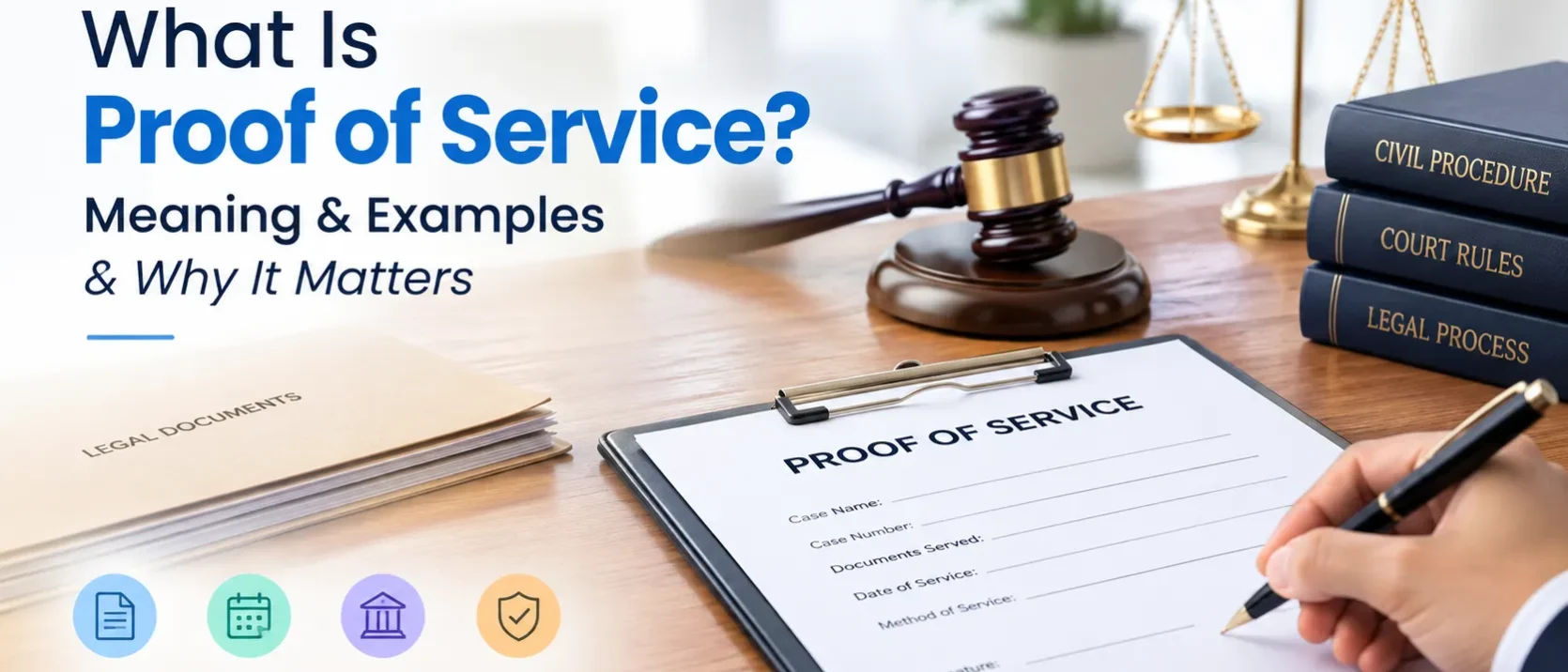
Proof of service form is a legal document that confirms when, where, how, and to whom court papers or other legal documents were delivered. It helps show the court that the required notification was completed according to the applicable rules.
Understanding what is proof of service is important because a court case may be delayed if documents are not served properly. The exact process and required paperwork depend on the court and jurisdiction.
What is Proof of Service in Court?
In some situations, the other parties may need to be served a copy of a legal document, such as a lawsuit. This is known as service of process or service of documents.
The evidence of service is documented on an “evidence of service” form. Usually states who is receiving the paperwork, where it is going, when it is being delivered, and how it is being delivered. Depending on the rules of the relevant jurisdiction, the person presenting the documents might have to sign the proof of service form or make a declaration under oath.
What Information Does a Proof of Service Form Include?
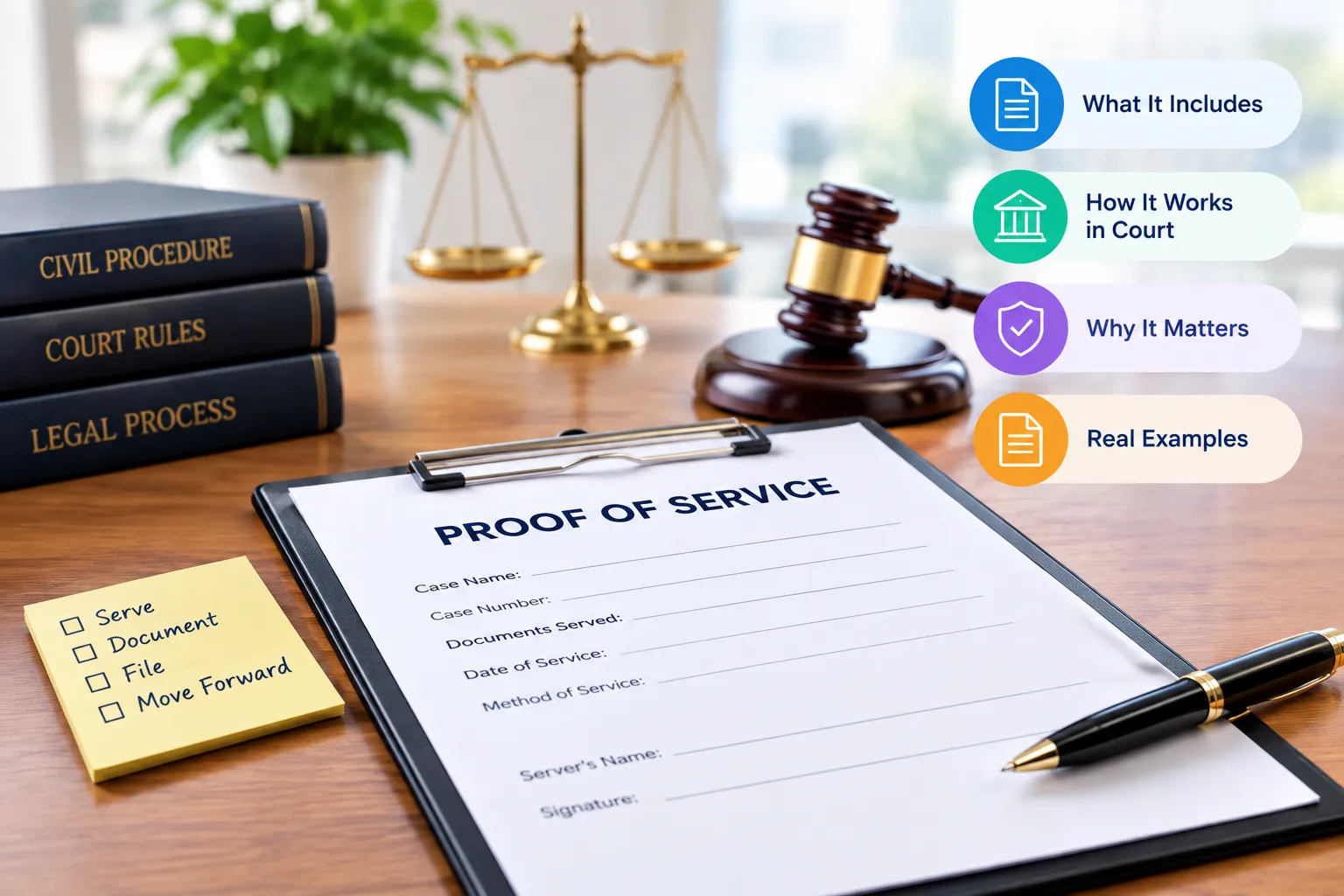
A typical proof of service form includes the case name or number, the names of the parties, a description of the documents delivered, and the date and method of service. It may also include the server’s name, address, signature, and a statement confirming that the information is accurate.
Some courts require a specific form, so it is important to use the correct version rather than assuming one general template will be accepted.
Proof of Service Example
For example, suppose a process server delivers a court summons and complaint to the appropriate recipient on October 5. The server fills out the form, marks the records of the documents delivered, and signs the form and date of the service.
The completed document will reflect the service or delivery attempt, depending on the actual service or delivery. The form is then filed with the clerk, if required by the court.
What Does Proof of Service Filed Mean?
Generally, when a case record indicates proof of service filed, it is assumed that a document reporting service has been filed with the court. It helps the court in determining if the needed service has been recorded.
However, filing the proof of service form does not automatically guarantee that service was legally valid. The court may still look into the question of who was served and who should have been served, and whether the proper procedure was followed.
What is Proof of Personal Service?
Personal service documents evidence the actual delivery of legal papers (where permitted and/or required). The server usually logs the time and location of the delivery, and the documents that were delivered.
There are jurisdictional and document-specific differences with regards to personal service rules. In some instances, the individual delivering the papers must be an adult and not be a party to the proceedings.
Affidavit of Non Service vs. Declaration of Non Service
An affidavit of non service records that an attempt to deliver legal documents was unsuccessful. It could indicate that the person or persons named could not be located, were not available, or were not served at the address listed.
A declaration of non service is similar, but could be structured differently and require different kinds of signatures. Generally, an affidavit is sworn or affirmed in the presence of an authorized official, and a declaration can be signed in the presence of an authorized official without any oath.
Both documents must contain a description of the events that occurred. If someone doesn’t get the service, the case doesn’t have to be finished, but another attempt or an alternative service that is approved by the court might be needed.
Why is Proof of Service Important?
Proof of service can prove that the necessary legal notice was given to the parties and can provide a record of the service. It can help to prevent disputes, clarify deadlines, and help the case proceed when the procedural requirements have been met.
Mistakes in service documentation may cause delays or require corrective steps. If there is any doubt as to the proper form or service, the instructions of the appropriate court or legal counsel should be consulted.
Conclusion
Proof of service is a crucial part in numerous legal cases that tracks the delivery of court documents. By understanding the proof of service meaning, the personal service and the difference between an affidavit of non service and a declaration of non service, you will be able to avoid making procedural mistakes. Make sure to review the requirements of the appropriate court to see if the required proof of service form is completed and submitted.
Frequently Asked Questions
Who fills out a proof of service form?
The documents are typically filled out by the individual who served them. Rules may set forth who may be served papers and what information must be given.
Does proof of service need to be filed with the court?
In many cases, yes. The filing process and deadline vary based on the filing of the document and court’s rules.
Can I serve court papers myself?
In some jurisdictions, a party is not allowed to serve their own papers. Please consult the rules if you are arranging for service in your court.
What happens if proof of service is missing?
The court can ask for more information, postpone the case or send the service back to be done once more. The outcome depends on the case and applicable rules.
Is proof of service the same as proof of delivery?
Not always. Proof of delivery may show that an item was delivered to an address or recipient and legal proof of service must comply with requirements for the court document.