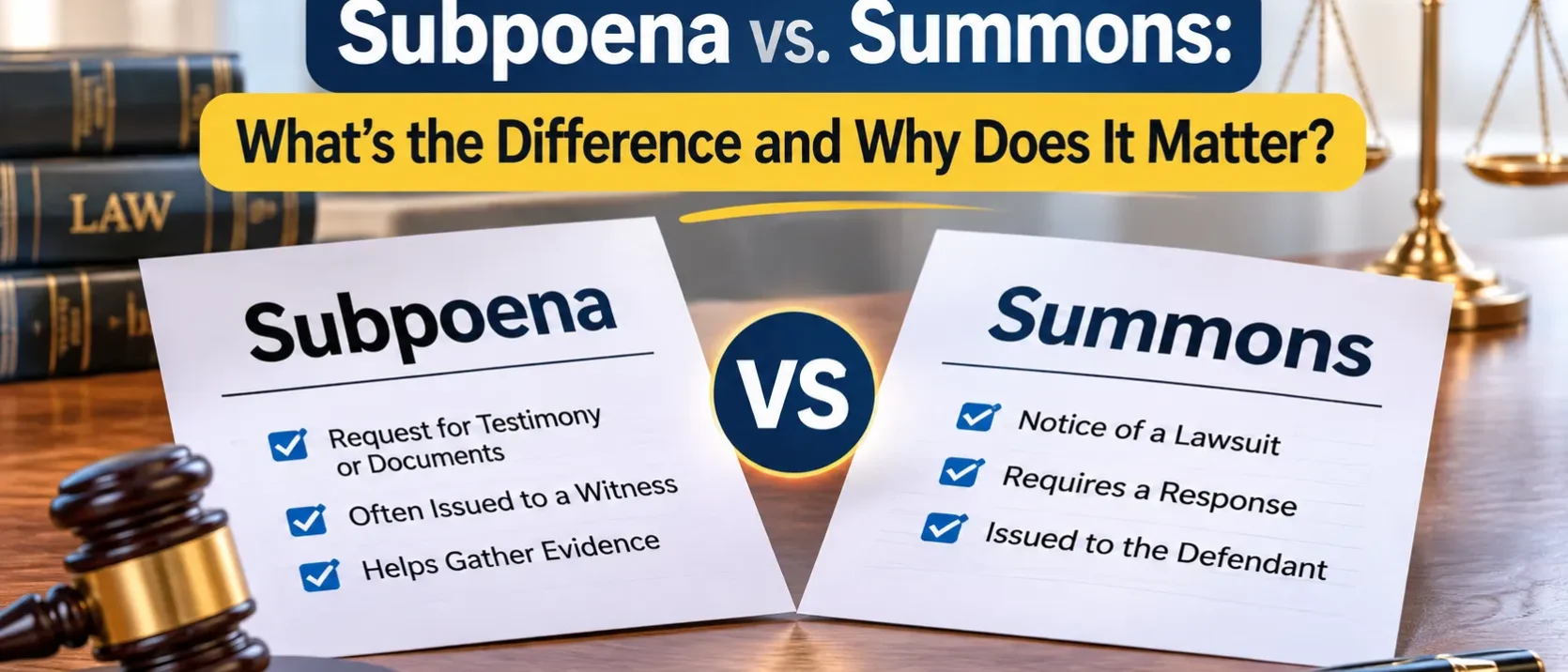
Receiving a legal document can be confusing, especially when it requires you to appear in court or respond to a legal matter. Two documents that often cause confusion are subpoenas and summonses. Although both are used in legal proceedings, they serve different purposes and place different responsibilities on the people who receive them.
Understanding summons vs subpoena can help you recognize what the document requires, when you need to respond, and what may happen if you ignore it. Whether you are involved in a lawsuit, called as a witness, or asked to provide records, knowing the difference can help you take the appropriate next steps.
What Is a Summons?
A summons is an official legal notice informing someone that a lawsuit or legal proceeding has been started against them. It is generally issued by a court and delivered to the defendant, notifying them that they must respond within a specified period.
The main purpose of a court summons is to give the defendant formal notice and an opportunity to participate in the case. It usually identifies the court, the parties involved, and the deadline for responding. Depending on the case and jurisdiction, the recipient may need to file an answer or another legal response.
What Is a Subpoena?
A subpoena is a legal document that requires someone to participate in a legal proceeding or provide evidence. It may be issued to a witness, an individual, or an organization that has information relevant to a case.
The purpose of a subpoena is to help collect testimony, documents, or other evidence needed for legal proceedings. For example, a person may receive a subpoena requiring them to appear in court and answer questions. A business may also be asked to provide records related to a dispute.
Summons vs. Subpoena: What Is the Main Difference?
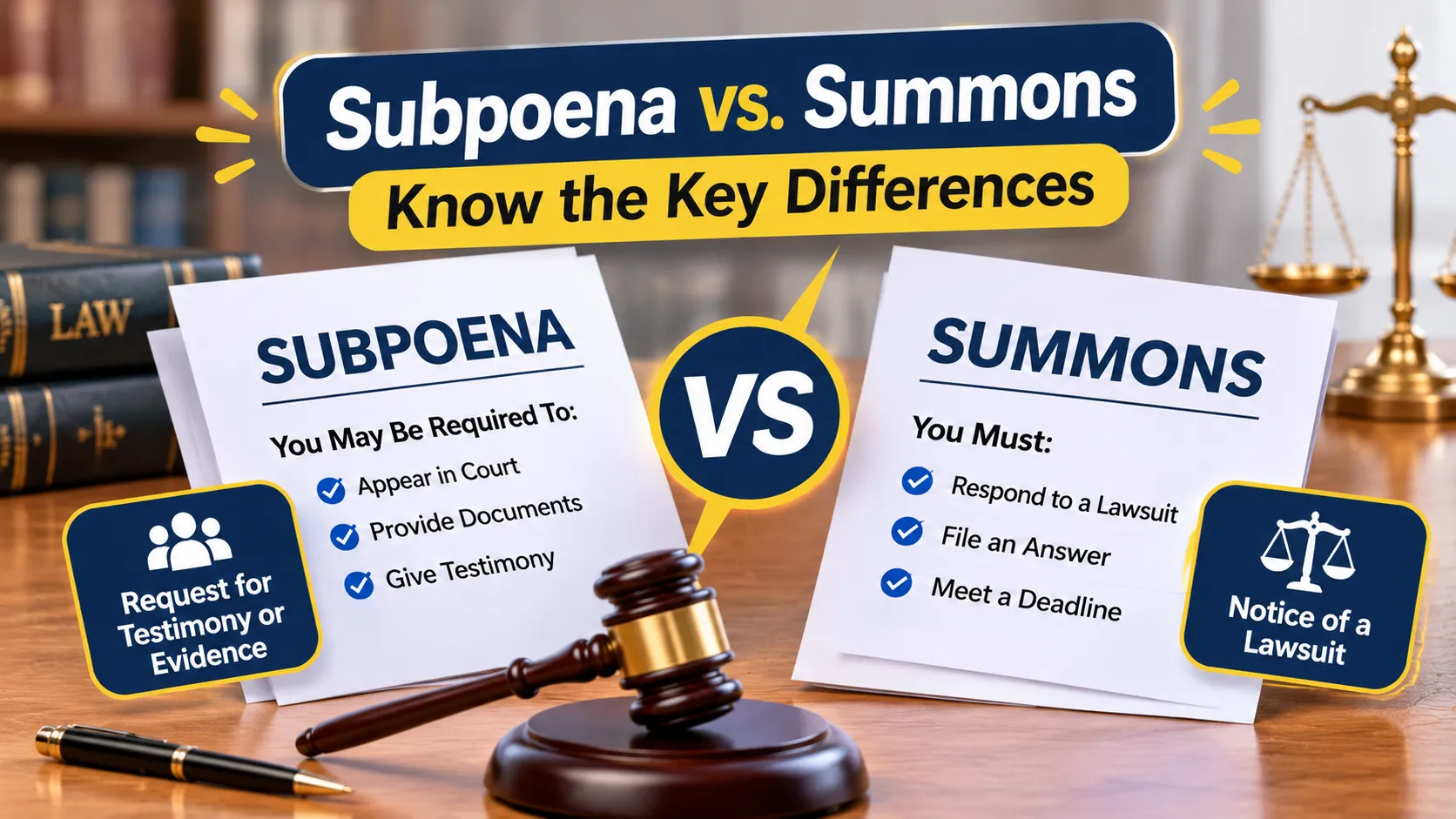
The main difference between a subpoena and a summons is what the document requires the recipient to do. A summons generally notifies a defendant about a legal case and requires them to respond. A subpoena requires someone to provide testimony, documents, or other evidence.
| Feature | Summons | Subpoena |
| Main purpose | Notifies someone of a legal case | Obtains testimony or evidence |
| Typical recipient | Defendant | Witness, individual, or organization |
| Common requirement | Respond to a lawsuit | Attend a proceeding or provide records |
| Issued in connection with | Starting or notifying someone of a case | Gathering evidence during legal proceedings |
| Consequences of ignoring it | Possible default judgment or other court action | Possible contempt proceedings or other penalties |
Understanding these subpoena and summons differences matters because responding incorrectly or missing a deadline can create legal complications.
When Is a Summons Issued?
A summons is generally issued when a lawsuit or certain other legal proceedings begin. It informs the defendant that a legal action has been filed and explains how they can respond.
For example, if a person files a civil lawsuit over an unpaid debt, the court process may require the defendant to receive a summons along with the complaint. The defendant must then follow the instructions and deadlines stated in the documents.
Summonses may also be used in other types of proceedings, depending on the jurisdiction. The exact requirements and response periods vary, so recipients should carefully review the notice rather than assume every summons follows the same rules.
When Is a Subpoena Issued?
A subpoena is issued when information, testimony, or documents are needed for a legal matter. It may be used during a lawsuit, a criminal proceeding, an investigation, or another authorized legal process.
For instance, a person who witnessed an accident may receive a subpoena requiring them to testify. Similarly, a company may receive one requesting emails, contracts, financial records, or other relevant documents.
There are different types of subpoenas. A subpoena ad testificandum generally requires someone to provide testimony, while a subpoena duces tecum requires the production of documents or other evidence. Some subpoenas may require both.
Why Does Understanding Summons vs. Subpoena Matter?
Knowing the difference between these documents helps you understand your role in a legal proceeding. A summons usually means you have been named as a defendant or otherwise need to respond to a legal action. A subpoena generally means your testimony or information may be relevant to a case.
The distinction also helps prevent missed deadlines and unnecessary legal problems. When you understand what the document requires, you can take the correct steps, protect your legal rights, and avoid treating one type of notice as though it were the other.
Frequently Asked Questions
Can You Receive a Subpoena Without Being Sued?
Yes. A subpoena can be sent to someone who is not a party to a lawsuit. A witness or organization may receive one because they have information, documents, or testimony relevant to the case.
Does a Summons Mean You Are Being Sued?
In a civil case, a summons commonly means a lawsuit has been filed against you and that you are being formally notified. However, summonses can also be used in other legal proceedings, depending on the jurisdiction and circumstances.
Who Can Issue a Subpoena?
The authority to issue a subpoena depends on the jurisdiction and type of proceeding. It may be issued by a court clerk, judge, attorney, or authorized administrative body under applicable rules.
Can You Challenge a Subpoena?
Yes. A recipient may be able to object to a subpoena if it is improper, overly broad, unduly burdensome, or requests privileged information. The objection must follow the applicable legal procedures and deadlines.
Do You Have to Attend Court If You Receive a Subpoena?
If a valid subpoena requires you to appear, you generally must attend unless the court or issuing authority excuses you or the subpoena is modified or quashed. Review the instructions and seek legal advice if you cannot attend.
What Is the Difference Between a Summons and a Court Notice?
A summons is a formal legal document that notifies someone of a legal proceeding and may require a response. A court notice is a broader term for communication from a court, such as a hearing date, scheduling update, or instruction.