
Serving legal documents is an important part of many court proceedings. Whether you need to deliver a subpoena, summons, complaint, or other legal notice, choosing the right person can help prevent delays and avoid problems with service requirements.
Knowing How to Choose a Process Server means looking beyond price. You need someone who understands local rules, communicates clearly, documents each attempt, and handles sensitive situations professionally. Before making a decision, ask these 10 questions to find a dependable provider.
1. Are You Licensed or Registered Where Required?
Process server licensing and registration requirements vary by state and jurisdiction. Some areas require specific credentials, while others have no general licensing requirement.
Ask whether the provider meets all local requirements and can explain the rules that apply to your case. Checking this early helps you avoid hiring someone who cannot legally perform the service in your area.
2. How Much Experience Do You Have?
Experience matters, especially when documents must be served under specific deadlines or in challenging circumstances. Ask how long the person has worked in the field and whether they regularly handle documents similar to yours.
An Experienced Process Server may be more familiar with difficult addresses, evasive recipients, and proper documentation. Ask for examples of the types of assignments they commonly complete.
3. What Types of Legal Documents Do You Handle?
Not every assignment involves the same paperwork or requirements. Some providers handle summonses, complaints, subpoenas, eviction notices, and family court documents.
A Professional Process Server should understand the documents they accept and know when special service rules may apply. Explain what needs to be delivered and confirm that the provider has experience with that type of assignment.
4. How Quickly Can You Complete the Service?
Deadlines can be important in legal proceedings, so ask about the expected turnaround time before hiring anyone. Find out when the first attempt will take place and how many attempts are included in the quoted price.
A Reliable Process Server should provide a realistic timeline rather than guarantee success without knowing the circumstances. If your assignment is urgent, confirm whether rush service is available and whether it costs extra.
5. How Do You Handle Difficult-to-Find Recipients?
Some recipients may be difficult to locate or may avoid accepting legal documents. Ask what steps the provider takes when the address is incorrect or the person is unavailable.
The answer should demonstrate knowledge of lawful service methods, careful recordkeeping, and appropriate follow-up. A good provider should never suggest using misleading or unlawful tactics to complete an assignment.
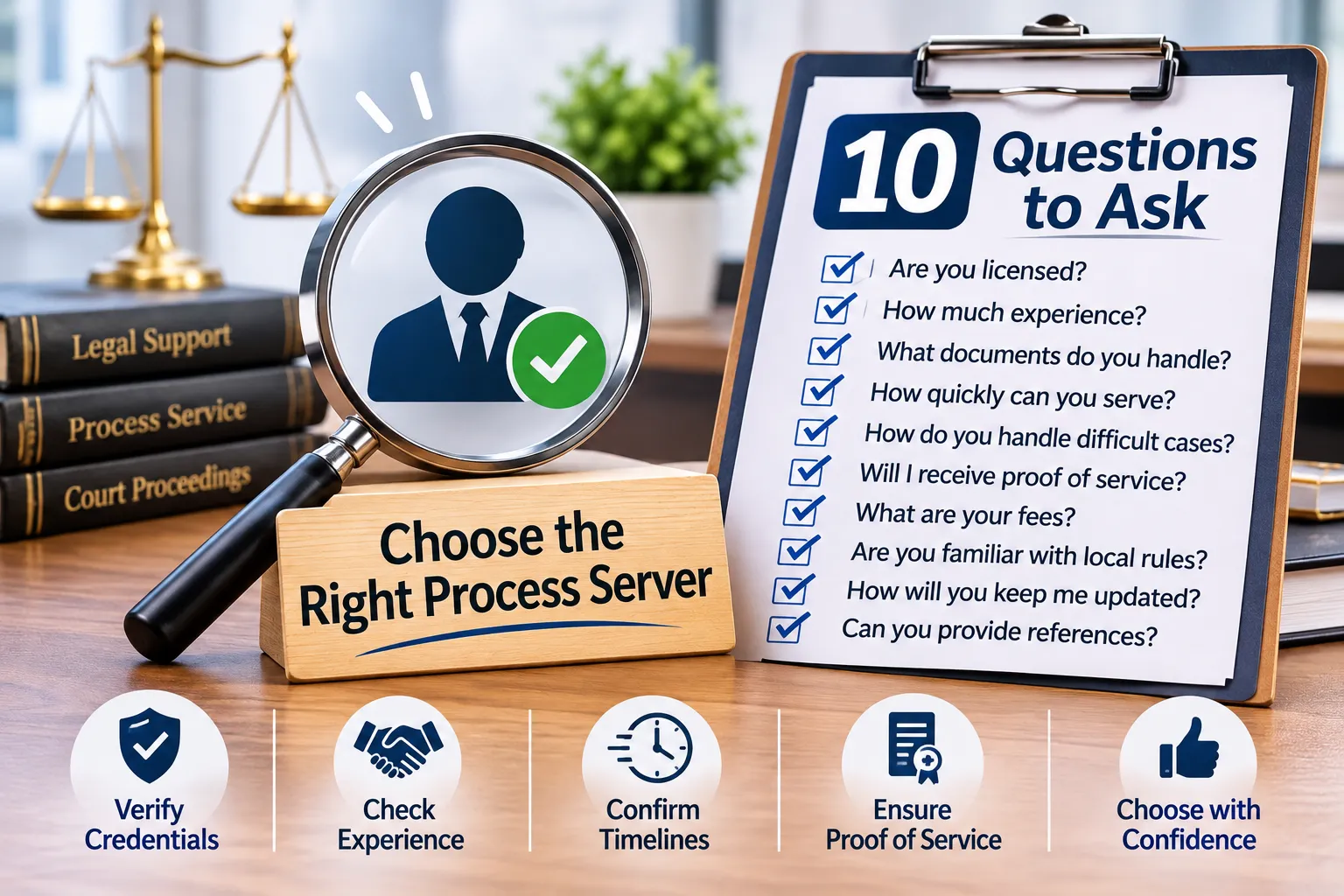
6. Will I Receive Proof of Service?
Proof of service is an important record showing when, where, and how documents were delivered. Depending on the jurisdiction and type of case, this may be called an affidavit or return of service.
Before hiring, ask what documentation you will receive and how quickly it will be provided. Confirm that the paperwork includes the required details and can be filed with the appropriate court when necessary.
7. What Are Your Fees and Additional Charges?
Costs can vary based on location, urgency, travel distance, number of attempts, and difficulty of service. Ask for a written quote that explains what is included.
When Hiring a Process Server, clarify whether additional attempts, mileage, address searches, rush requests, or after-hours visits cost extra. Comparing complete quotes is more useful than choosing the lowest advertised price.
8. Are You Familiar With Local Service Rules?
Legal service requirements can differ between states, counties, and courts. Ask whether the provider regularly works in the relevant jurisdiction and understands its applicable rules.
Process Server Qualifications may include training, registration, experience, or knowledge of local procedures, depending on the location. Choose someone who understands the rules for your specific assignment.
9. How Will You Keep Me Updated?
Clear communication can make the process easier, especially when deadlines are approaching. Ask whether you will receive updates after attempts, notice of any problems, and confirmation when service is completed.
A Reliable Process Server should be reachable and willing to explain delays or changes. Find out whether updates are provided through email, phone, or an online tracking system.
10. Can You Provide References or Reviews?
Reviews and references can help you understand how a provider works with clients. Look for feedback about punctuality, communication, professionalism, and accurate documentation.
When deciding What to Look for in a Process Server, pay attention to consistent feedback rather than relying on one positive review. You can also ask attorneys or legal professionals for recommendations.
What Qualities Make a Good Process Server?
Beyond the answers to your questions, consider the person’s overall approach. The Qualities of a Good Process Server include:
- Professionalism: Treats recipients and clients respectfully.
- Attention to detail: Records dates, times, locations, and service attempts accurately.
- Persistence: Makes appropriate attempts within the agreed timeframe.
- Knowledge: Understands applicable service rules and procedures.
- Communication: Provides clear updates and responds to questions.
These qualities help ensure the assignment is handled carefully and that you receive the necessary documentation.
How to Find a Reliable Process Server
Start by asking your attorney, law firm, or local legal network for recommendations. You can also search professional directories and review providers who regularly work in the area where service is required.
When researching How to Find a Reliable Process Server, compare experience, service coverage, pricing, and recent client feedback. Confirm the provider’s credentials where required and ask for a written explanation of the service process before paying.
Conclusion:
Choosing the right process server can help keep legal proceedings organized and reduce avoidable delays. Ask about experience, local requirements, pricing, communication, and proof of service before making your decision.
Understanding How to Choose a Process Server allows you to compare providers based on more than cost. Take time to verify their qualifications and choose someone who handles every assignment with care, accuracy, and professionalism.
Frequently Asked Questions
Can I hire a process server directly?
Yes. Individuals, businesses, attorneys, and law firms can often hire process servers directly. However, check whether your court or jurisdiction has specific requirements.
How many attempts should a process server make?
There is no universal number. It depends on the agreement, local requirements, deadlines, and circumstances of the assignment. Ask what is included in the fee.
What happens if the recipient cannot be found?
The provider may document unsuccessful attempts and discuss lawful next steps, such as verifying the address or seeking additional instructions from your attorney.
Is the cheapest process server the best choice?
Not necessarily. A low price may exclude important services or additional attempts. Compare experience, documentation, communication, and the full cost before deciding.
Can a process server deliver documents at night or on weekends?
This depends on applicable laws and the circumstances of the assignment. Ask whether the provider offers these visits and whether any restrictions or additional fees apply.