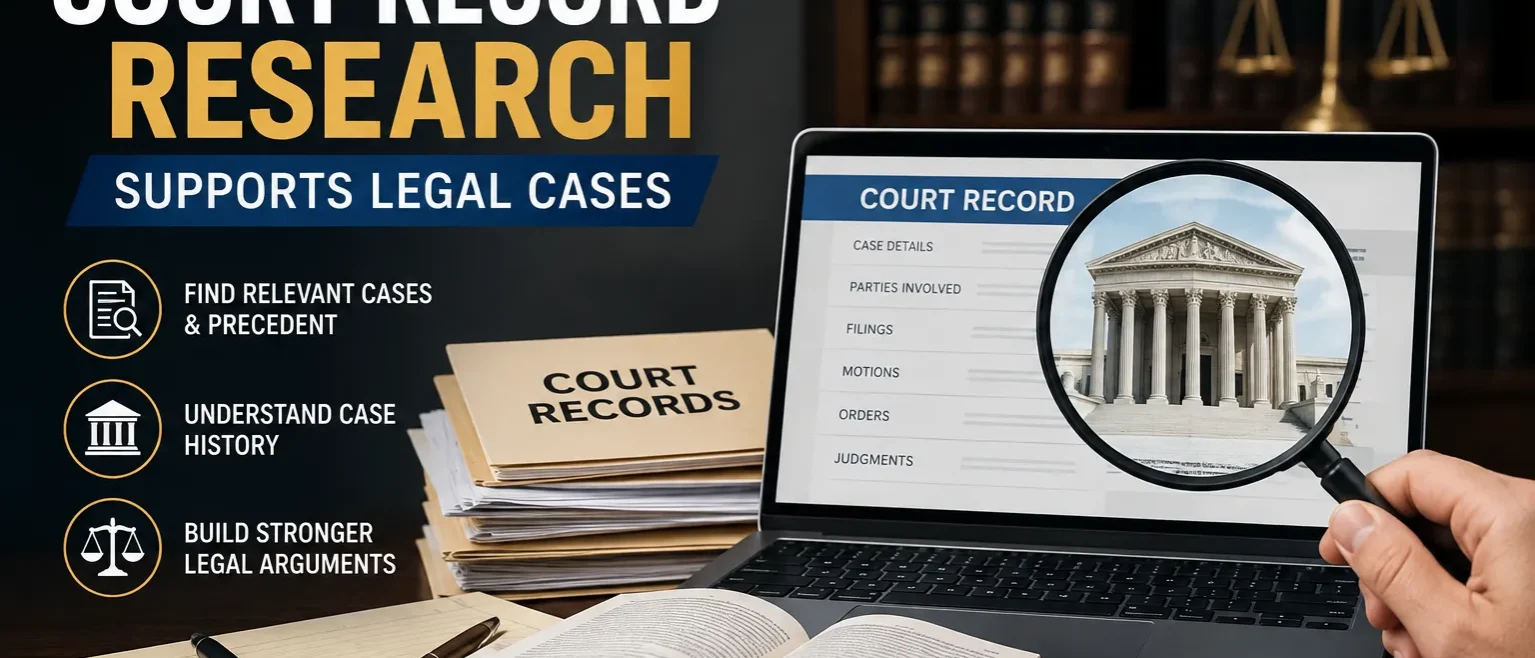
Legal case research helps attorneys identify relevant precedent, understand how courts have interpreted the law, and examine records that may reveal important facts or procedural details. Court records may also contain details that are not apparent from a basic case summary. Reviewing these materials can give attorneys a clearer picture of how a case developed.
What Is Legal Case Research?
Legal case research involves the process of locating and analysing court decisions, case records, statutes, regulations and other legal sources concerning a particular issue. For matters requiring more extensive research, legal research services can help locate and organize relevant legal information.
Attorneys can use legal research to find relevant precedent, understand how courts have interpreted the law, and identify authorities that support a legal argument.
Why Is Legal Case Research Important?
Legal research is important because attorneys need accurate, current information when evaluating legal issues and preparing a case.
- Building stronger arguments
- Finding relevant precedent
- Understanding court decisions
- Creating motions and briefs
- Determining case weaknesses
- Supporting factual claims
How to Research Legal Cases
Knowing how to research legal cases starts with clearly defining the legal question.
A Simple Research Process
- Identify the main legal issue
- Search for relevant cases and statutes
- Review the most relevant decisions
- Check whether cases are still good law
- Examine related court records
- Organize useful findings
- Apply the research to the specific case
Starting with a focused question can make legal case research faster and more accurate.
How to Research Case Law
Knowing how to research case law is more than just locating cases with similar words. Attorneys must review the legal rationale, facts, jurisdiction, and result of the case.
Attorneys should pay particular attention to decisions from controlling courts because those decisions may establish binding precedent. Decisions from other jurisdictions may provide persuasive reasoning but may not be binding.
What Is the Legal Research Process?
The legal research process begins by defining the legal question, identifying authoritative sources, and analyzing how those sources apply to the facts.
The legal case research process should also include checking citations and subsequent rulings. A case that originally seemed relevant might have been narrowed, overturned or distinguished by a subsequent court.
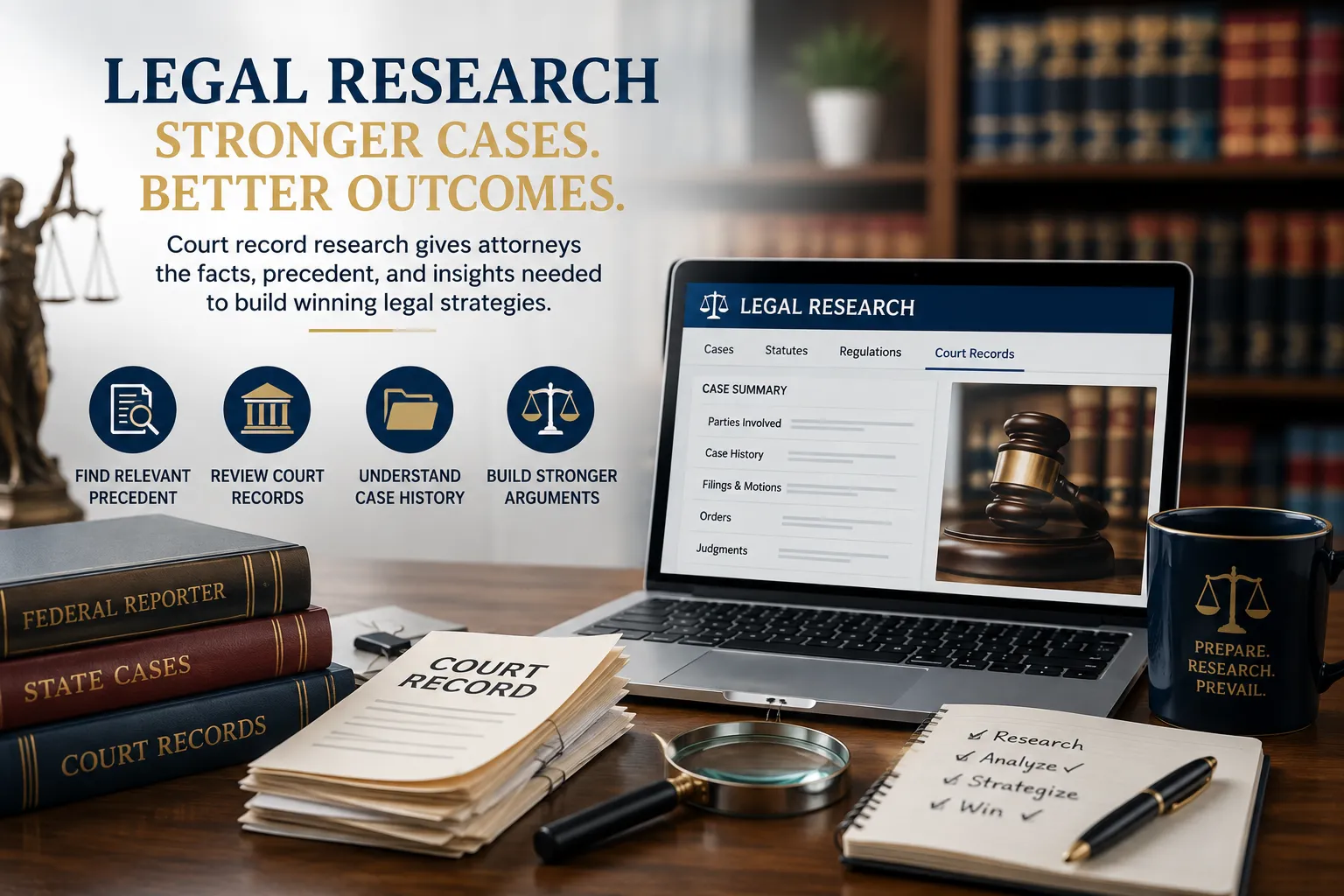
How Court Records Support Legal Cases
Court records provide firsthand information about what happened during litigation. Court Records Retrieval can help attorneys obtain relevant filings and other available records needed to understand the history and development of a case.
Reviewing these materials can help attorneys:
- Verify important facts
- Understand procedural history
- Identify arguments made by each side
- Review previous rulings
- Locate evidence or documents
- Track how the court reached its decision
This makes court records an important part of thorough legal case research.
What Are the Different Types of Legal Research?
Basic legal research can include researching statutes, regulations, court opinions, and secondary legal sources.
- Case law research
- Statutory research
- Regulatory research
- Legislative history research
- Constitutional research
- Court record research
The type of research required depends on the legal question and the stage of the case.
Basic Legal Research Tips for Attorneys
The following are some helpful tips in legal case research. Begin with authoritative research sources and take careful notes of each case that is important.
Be sure to check jurisdiction, date, court, legal issue and current status of case. Do not assume that similar facts mean the same legal rule will apply. Consider the jurisdiction, legal issue, procedural posture, and reasoning of the court.
Organizing research around the legal issue can also make it easier to use the findings when preparing briefs and arguments.
What Are Some Legal Research Examples?
Examples of legal research include researching for a case that addresses a specific statute, researching how courts have applied a contract provision, or reviewing past decisions with facts similar to those in the case at hand.
An attorney can also check whether a previous ruling will still be in effect or what the procedural requirements are and when the deadlines are.
How Does Court Case Research Help Attorneys?
Researching court cases can help attorneys gain insight into how courts have previously addressed fact and legal issues.
Reviewing past cases can reveal useful arguments, unfavorable precedent, procedural trends, and potential pitfalls. It can also assist attorneys in preparing for any argument that may be advanced by the opposing party.
Conclusion
Thorough legal research gives lawyers the information they need to evaluate legal issues, precedent, and potential arguments.
Court records also provide a layer of information, displaying the court history and filings of a case. With the combination of statutes, regulations, and case law, careful research can help to facilitate better-informed legal decisions.
Frequently Asked Questions
What is legal case research?
Legal case research is the process of identifying and analyzing legal cases, statutes, regulations and case records to gain insight on an issue and how relevant authorities may apply.
Why are court records important for legal research?
Some information that might not be found in a concise case summary may be found in court records, such as case filing information, arguments, evidence, rulings, procedural history, etc.
What is the legal research process for attorneys?
Attorneys typically spot the legal issue, consult authoritative resources, analyze pertinent cases, and determine their status, and then use the results to inform the facts of the case.
What is the difference between case law and court records?
Case law typically applies to court decisions and may be used as legal precedent while court records are the greater body of documents that are filed or generated in the specific matter.
Why should attorneys check whether a case is still valid?
An earlier ruling can be overruled, modified or qualified by a later court. Reviewing later history can assist attorneys from relying on outdated authority.
Can court records contain evidence?
Yes. In some cases, exhibits, filings and testimony references, among other documents, will be included in the Court records, which can be useful for attorneys in identifying facts or evidence.
What makes legal research effective?
Authoritative sources, correct jurisdiction, verification of cases, and a link to the legal and factual issues contained in the research are all characteristics of effective research.
What are common legal research mistakes?
Common mistakes include relying on old cases that don’t hold up, ignoring jurisdiction, using weak sources, not checking if a decision got overturned, and researching broad topics without actually pinning down the legal issue. These mistakes can lead to wasted research time and may result in inaccurate or outdated legal analysis.
Why is legal research important for attorneys?
Because you need to know the law that actually applies to your case. Good research gives you solid precedent, helps you shape your arguments, gets your court documents right, and helps you make smart calls on strategy. Without it, you’re guessing.
How does court case research support a legal argument?
It gives you real cases and facts that back up your position. It helps you show the judge why a certain rule or interpretation fits your client’s situation. It’s about taking the law and making it work for your client’s story.