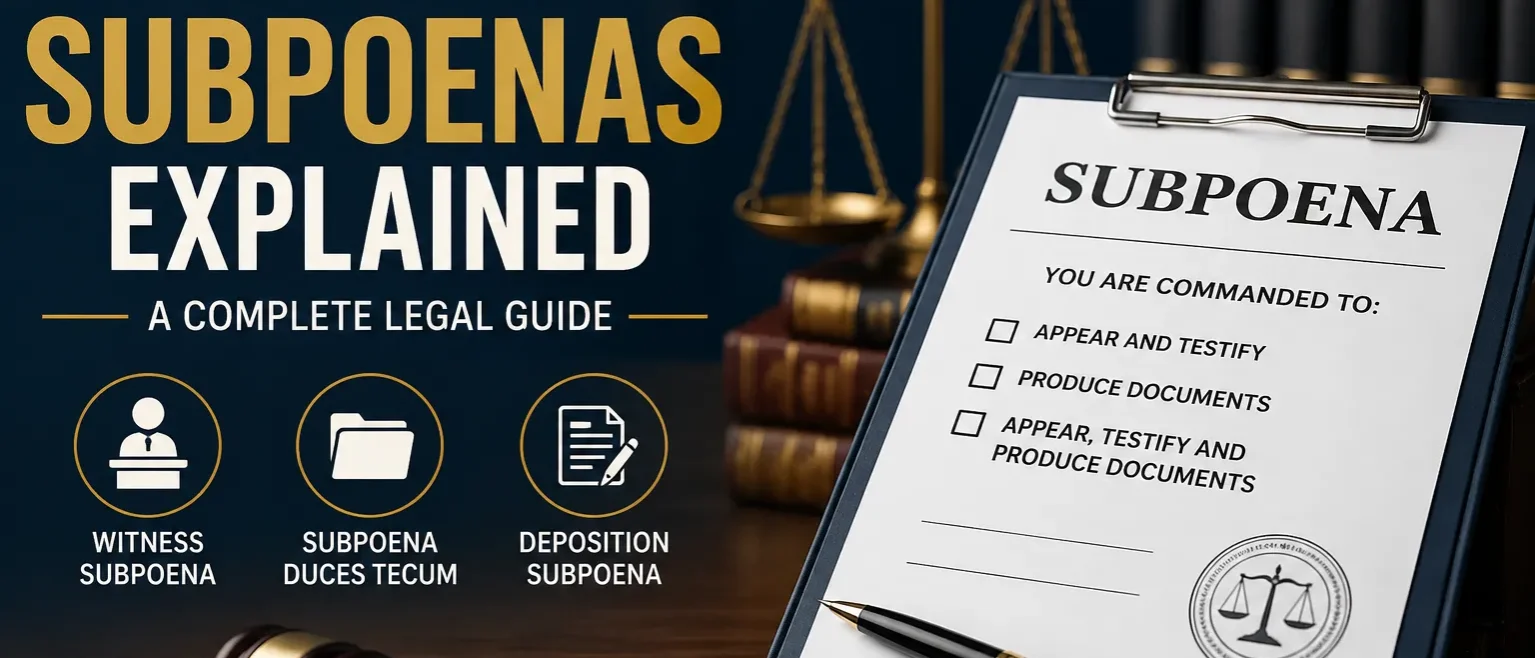
Types of Subpoenas: Understanding the Different Court Orders
Receiving a subpoena can feel overwhelming. You open the envelope, see your name, and notice that the court is involved. Naturally, your first reaction may be worry or confusion. However, understanding the different types of subpoenas can make the situation far less intimidating. Once you know what the document requires, you can respond appropriately and avoid unnecessary stress.
What Exactly Is a Subpoena?
A subpoena is a legal document issued by a court at the request of one of the parties involved in a legal case. Unlike a simple request, a subpoena is a court order that requires legal compliance during a lawsuit or legal proceeding.
Many people believe a subpoena only requires someone to appear in court. In reality, a subpoena may also require you to provide documents, business records, electronic communications, or other evidence relevant to the case.
The word “subpoena” comes from Latin and means “under penalty.” Therefore, ignoring a subpoena can result in serious legal consequences. A court may hold you in contempt, which could lead to fines, the issuance of a warrant, or, in some situations, arrest.
The Three Main Types of Subpoenas
Although subpoenas serve different purposes, they generally fall into two primary categories, with deposition subpoenas acting as a specialized form used during discovery. Each type requires a different response depending on the information or testimony being requested.
1. Subpoena Ad Testificandum
A Subpoena Ad Testificandum requires a person to testify under oath. In other words, it compels a witness to appear in court or attend a deposition and provide oral testimony.
Who receives it? :- Witnesses, Expert witnesses, individuals with relevant knowledge about the case
Where is it used? :- Court trials, Hearings, Depositions
What must you do?
Appear at the specified date, time, and location, then provide truthful testimony under oath.
Unless the court excuses you or a valid legal objection applies, you must comply with this type of court subpoena.
2. Subpoena Duces Tecum
A Subpoena Duces Tecum is the Latin term meaning “you shall bring with you.” Rather than requiring testimony, this subpoena directs a person or organization to produce specific documents, records, or tangible evidence.
Who receives it? :- Individuals, Businesses, Government agencies, Organizations possessing relevant evidence
Where is it used? :- Trials, Hearings, Depositions, Pre-trial discovery
What must you do?
Produce the requested documents or other specified materials for inspection or bring them to the required location.
For example, a subpoena for documents may request:
- Medical records
- Financial statements
- Contracts
- Emails
- Business records
- Other relevant evidence
However, a subpoena cannot be used as a “fishing expedition.” The request must identify the documents with reasonable specificity so the recipient can locate them without conducting an unreasonable search.
3. Deposition Subpoenas
A deposition subpoena is commonly used during the discovery phase of litigation. Instead of requiring testimony in a courtroom, it requires a person to appear for a deposition, where testimony is given under oath before trial.
Depositions usually occur in a lawyer’s office or another agreed-upon location. Additionally, the testimony is recorded and may later be used as evidence during the trial.
There are three common types of deposition subpoenas:
- Deposition Subpoena for Personal Appearance – Requires you to appear and provide sworn testimony.
- Deposition Subpoena for Production of Business Records – Requires you to produce specified documents without appearing for testimony.
- Deposition Subpoena for Personal Appearance and Production of Documents – Requires you to testify under oath and produce the requested documents.
Ultimately, deposition subpoenas play an important role in preparing a legal case. They allow attorneys to gather evidence, evaluate witness testimony, and understand the facts before the case reaches trial.
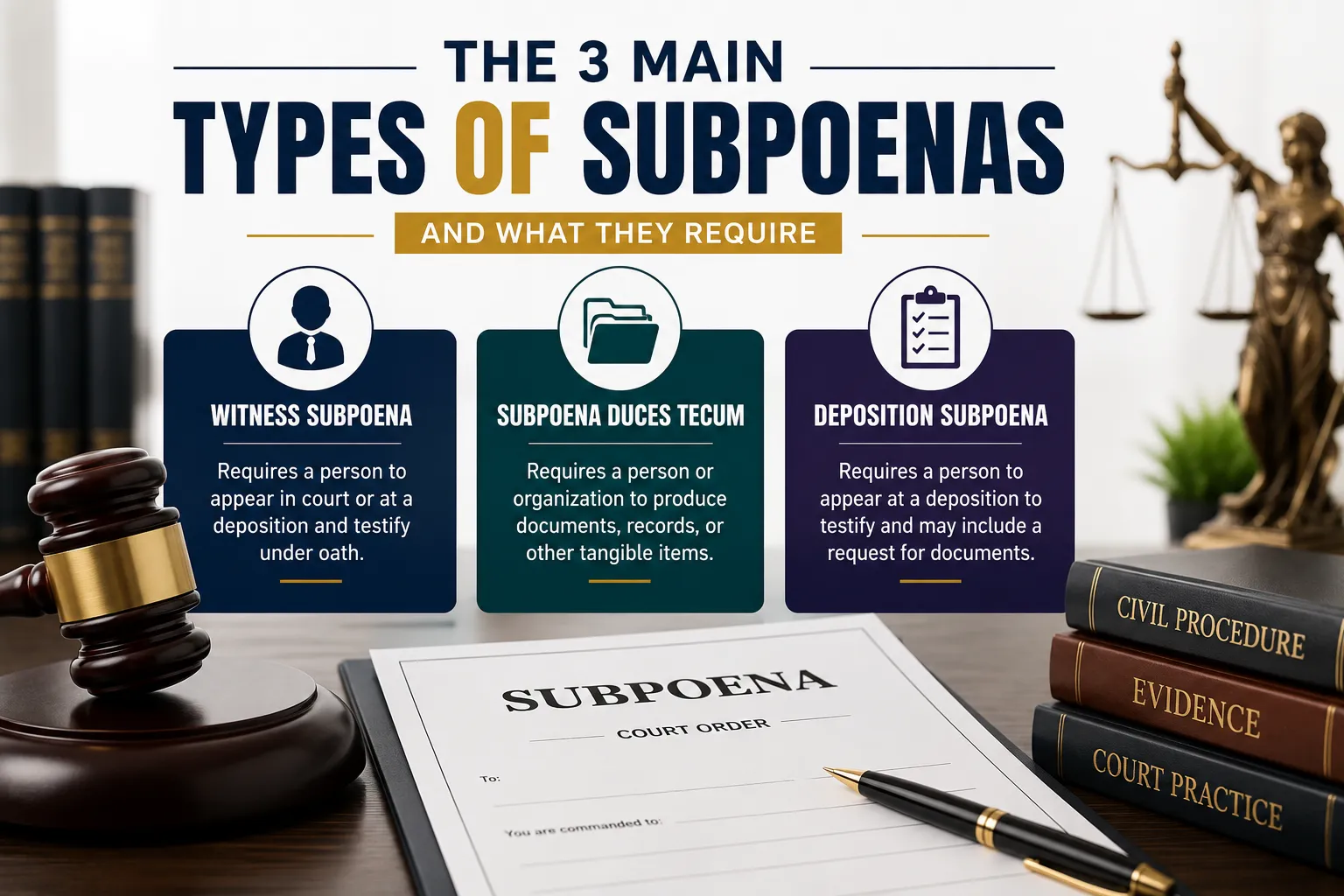
Combined Subpoenas: Testimony and Documents
Often, a subpoena for testimony and a subpoena for documents are combined. You receive a single document commanding you to appear and bring specific materials.
Here is the breakdown:
Subpoena to attend and give evidence: You appear in court and testify. No documents required.
Subpoena to produce: You produce documents. You do not necessarily need to testify.
Subpoena to attend, give evidence, and produce: You must both testify and bring documents.
Special Considerations for Subpoenas
Subpoena to Produce Documents Only
You may receive a subpoena for documents only. This means you are not required to appear in court or testify. Producing the requested records is all that is required. Submit the documents to the address provided on the subpoena before the specified deadline rather than sending them directly to the requesting party. They go to the court.
Subpoena to Attend Court
If you receive a witness subpoena, you must appear in court on the date and time specified. You must testify truthfully. Failure to appear can lead to a warrant for your arrest.
Service and Compliance
Subpoenas must be served in person. The person must be given a reasonable amount of time to comply. If the subpoena requires attendance, the serving party must provide “conduct money” to cover travel expenses.
If you are unable to comply, you can object. You can apply to have the subpoena set aside or modified. But you must act quickly. Do not ignore it.
Conclusion:
Understanding the types of subpoenas is essential. Whether you receive a court subpoena, a deposition subpoena, or a subpoena for documents, you have rights and obligations. You must comply. But you can also object if the request is unreasonable or overly broad.
The key is not to panic. Read the document carefully. Understand what it is asking. If you are unsure, seek legal advice. A subpoena is a legal tool. It is designed to gather evidence, not to punish you. Handle it correctly, and it becomes just another step in the legal process.
Frequently Asked Questions
What are the different types of subpoenas?
The main types of subpoenas are the subpoena ad testificandum (to testify) and the subpoena duces tecum (to produce documents). A deposition subpoena is also common. These can be combined.
What is a subpoena duces tecum?
A subpoena duces tecum is a court subpoena that requires a person to produce specific documents, records, or tangible items for a legal proceeding.
What is a deposition subpoena?
It’s a legal order that forces someone to show up for a deposition and give sworn testimony. They can also make you bring documents with you.
What’s the difference between a subpoena and a witness subpoena?
A witness subpoena is a specific type, it orders someone to appear in court or at a deposition to testify. That’s the one you hear about most often.
Can I object to a subpoena for documents?
Yeah, you can push back. If the request is way too broad, overly burdensome, or asks for privileged stuff, you can object. You’d have to file a motion to quash or modify it.
What happens if I ignore a subpoena?
You can be held in contempt of court which means fines, a warrant for your arrest, or other penalties. Ignoring it is not a smart play.