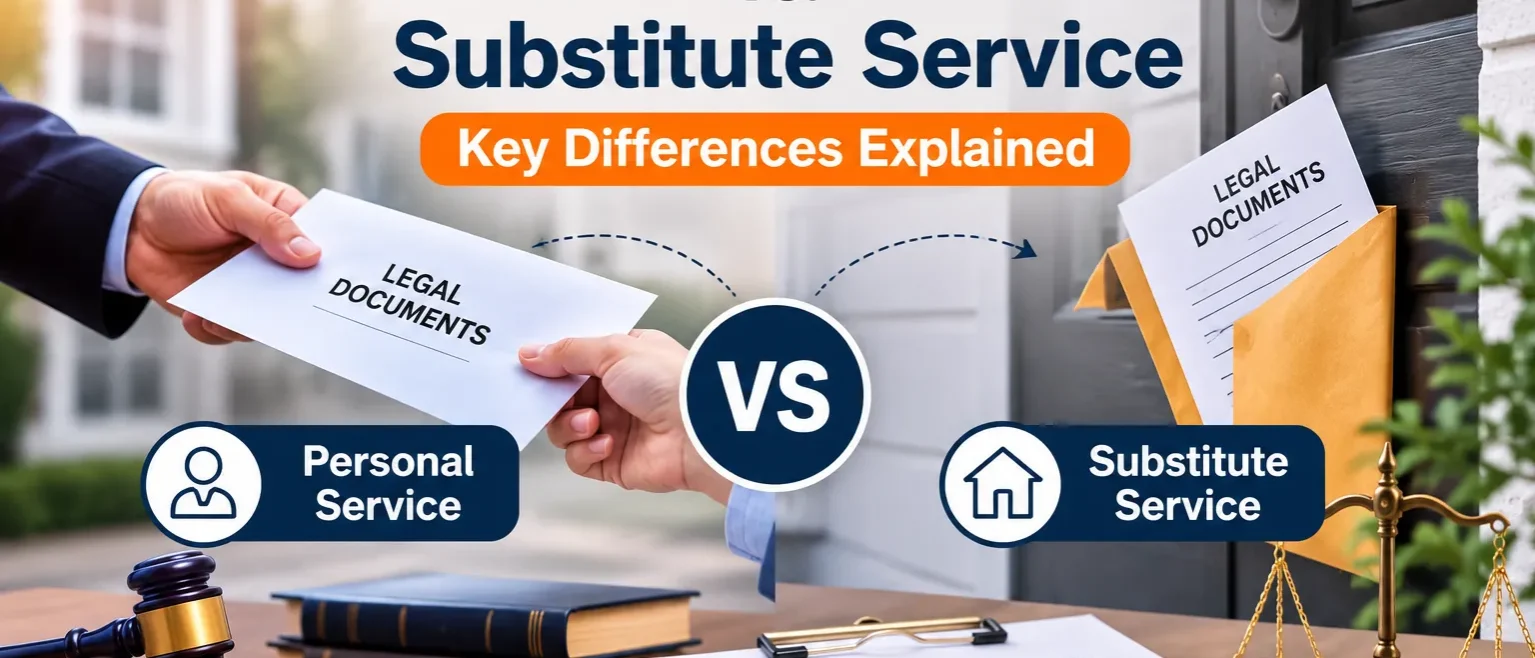
Getting sued is stressful enough. But the whole thing cannot even start until the paperwork actually reaches the person being sued. That is where personal service vs substituted service comes in.
These are two different ways to deliver legal service of process papers. One is straightforward. The other is for when the first one just will not work.
What Is Personal Service of Process
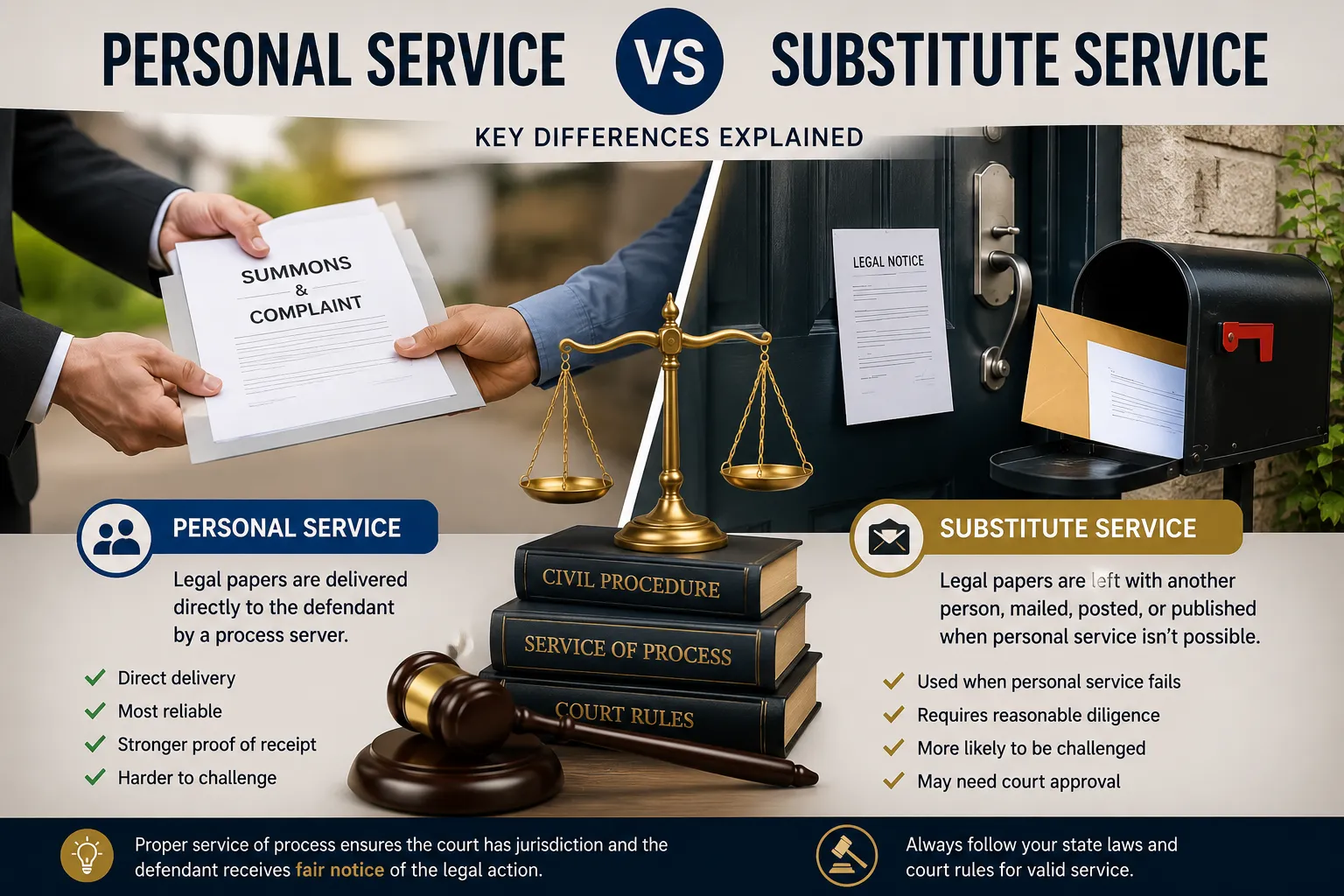
Personal service of process requirements is exactly what it sounds like. Someone physically hands the legal papers directly to the person named in the document.
This is the gold standard. It is the most reliable way to make sure someone actually gets the papers. When a process server hands a summons to a defendant, there is no question about whether they received it.
Usually a sheriff, a licensed process server, or any adult who is not a party to the case/ The plaintiff cannot serve the papers themselves. The court needs an impartial witness.
proper personal service establishes that the court has jurisdiction over the defendant. Without it, the case cannot move forward .
What Is Substituted Service of Process
Substituted service of process is the backup plan. It is used when personal service is not possible . Instead of handing papers directly to the defendant, they are left with someone else or in a place where they are likely to get them.
Examples of substitute service of process include:
– Leaving papers with a responsible adult at the defendant’s home or workplace .
– Mailing papers to the defendant’s last known address .
– Posting papers on the defendant’s door (nail and mail) .
– Publishing a notice in a newspaper (constructive service) .
But there is a catch. You cannot just skip personal service because it is inconvenient. You must show “reasonable diligence” – meaning you made a genuine effort to find the person and serve them personally .
When Substituted Service Is Allowed
Not every case qualifies for substitute service. Courts require evidence that personal service is genuinely impractical.
The “reasonable diligence” standard:
Before a court allows substituted service, the plaintiff must show they made good-faith attempts to serve the defendant personally . This might include multiple visits to the defendant’s home, checking known workplaces, and searching public records.
In a recent Colorado case, the court allowed substituted service after the plaintiff attempted personal service six times at the defendant’s home . The court found that was enough to show the defendant was avoiding service.
Some states only allow substituted service for certain types of cases. Others require a court order first. Always check the specific rules in your jurisdiction for personal service vs substituted service.
Common Methods of Substituted Service
Courts can authorize various methods depending on the situation of personal service vs substituted service:
- Leaving with an adult at home. If the defendant cannot be reached, papers can be left with a responsible adult at their residence.
- Service at work. Papers can be left at the defendant’s usual place of business with someone in charge.
- Nail and mail. In some states, if personal service fails, papers can be posted on the defendant’s door and a copy mailed.
- Electronic service. More courts are allowing service through email, WhatsApp, or social media when traditional methods fail . However, this usually requires a court order.
- Service by Publication. When the defendant’s whereabouts are completely unknown, a notice may be published in a newspaper. This is called constructive service.
Which personal service vs substituted service method is best
Personal service is always better when you can manage it. It is harder to challenge in court. There is no question about whether the defendant actually got the papers.
Substituted service is a practical necessity when people are avoiding service or cannot be found. But it comes with risks. The defendant may later claim they never received the papers.
If you are the one being served, you cannot avoid personal service by refusing to accept the papers of personal service vs substituted service. A process server can leave them at your feet or note your refusal. Service is often still considered valid .
Conclusion:
Personal service vs substituted service comes down to one question: can you hand the papers directly to the person? If yes, that is what you do. If your case involves multiple service attempts or court deadlines, professional litigation support can help ensure documents are served correctly and on time.
The law requires notice. But it also understands that some people do not want to be found.
Frequently Asked Questions
What is the main difference between personal service and substituted service?
Personal service means the legal papers are handed directly to the defendant. Substituted service means they are left with another responsible person or mailed when personal service cannot be done.
When is substituted service allowed?
Substituted service is allowed when the plaintiff can show “reasonable diligence” in trying to serve the defendant personally. This means multiple attempts at known addresses and good-faith efforts to locate the person.
Can substituted service be challenged in court?
Yes. A defendant can argue they never received the papers or that the substituted service method was not approved by the court. Proper documentation is important.
What is “constructive service”?
Constructive service is a type of substituted service where notice is published in a newspaper because the defendant’s whereabouts are unknown. It is generally allowed only in cases involving property or status like divorce.
Do I need a court order for substituted service?
It depends on your state. Some states allow certain types of substituted service without prior court approval. Others require a judge’s order. Check your local rules or ask a lawyer.
Can I serve someone by email?
Courts are increasingly allowing electronic service through email or social media, but usually only with a court order. Simply emailing papers without permission is often not valid service.
Who can serve legal papers?
An adult who is at least 18 years old and not a party to the case. Sheriffs, process servers, and sometimes private individuals qualify. The plaintiff cannot serve their own papers.
What is a “nail and mail” service?
A method where the process server posts the legal papers on the defendant’s front door and mails a copy to their last known address. It is allowed in some states after personal service attempts fail.
What happens if substituted service is invalid?
The court may not have jurisdiction over the defendant. The case could be dismissed or the defendant could later have the judgment set aside for improper service.
Why is personal service preferred over substituted service?
Because there is no question about whether the defendant received the papers. It provides the strongest proof of notice and is harder to challenge in court.