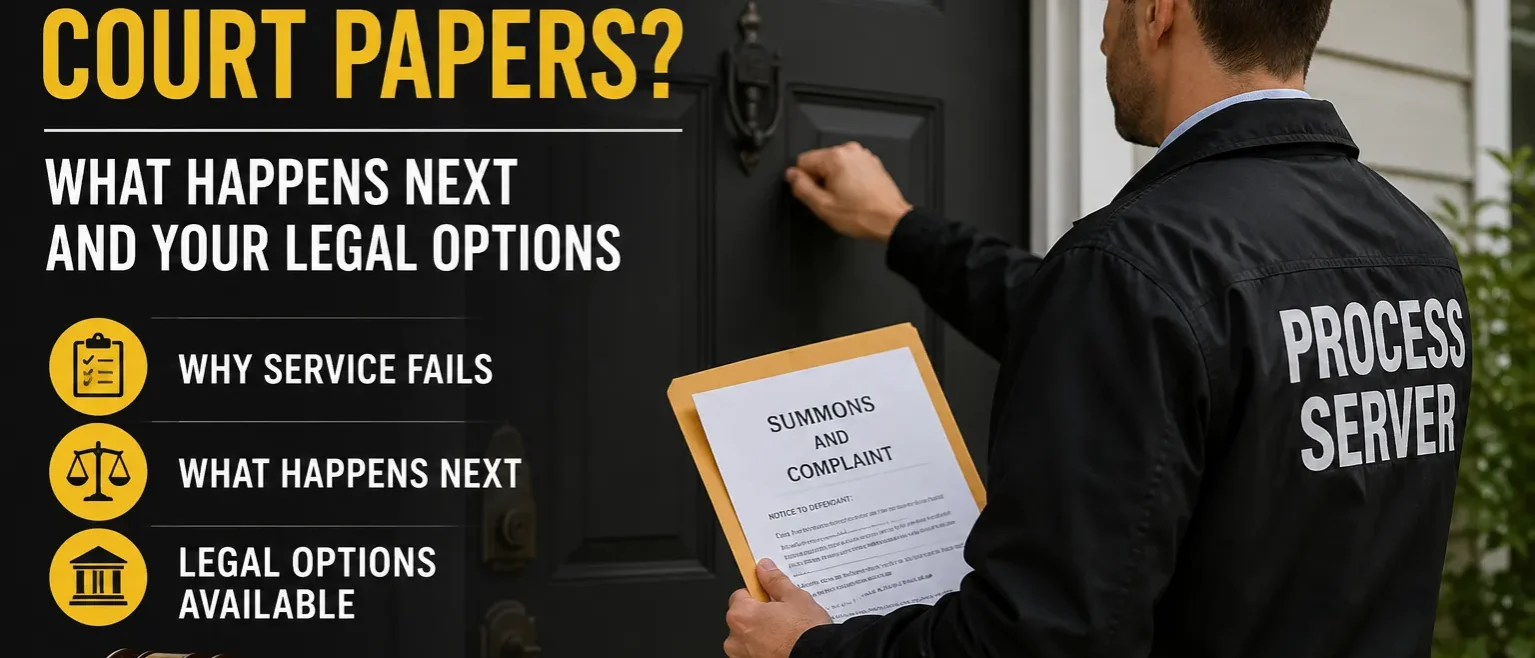
Being unable to serve someone with court papers can be frustrating, especially when it delays a lawsuit or other legal matter. In most situations, refusing service does not make the case go away. Instead, additional attempts may be made, or the court may allow another legally approved method of service.
Because service of process rules vary by state, court, and case type, understanding what happens when service fails and what legal options may be available is important for keeping the case moving forward.
What Happens If You Avoid Being Served Court Papers?
Based on local regulations, the plaintiff could seek permission to use a different legally approved process of serving.
In some states, papers are delivered or left in a manner that is legally permissible even if the person refuses to cooperate. This is why knowing what happens if you avoid being served court papers is important before assuming the case will simply stop.
What Happens If a Process Server Can’t Serve You?
If personal service is not successful, then the next step depends on the reason behind the failure and the regulations applicable to the particular situation. Process servers can try various times or locations and keep detailed notes of each service. The plaintiff could use that evidence when requesting the court for additional instructions.
Common reasons why the service is not working
- The person isn’t home all the time.
- The address is out of date.
- The person deliberately avoids the server.
- The server cannot find the user.
- It is possible to access the premises.
- Local service requirements haven’t been fulfilled.
These situations help explain what happens if you avoid being served court papers and why additional service attempts may follow.
How to Serve Someone Who Is Avoiding Service
If you’re seeking to assist someone who seems to be refusing to be served, don’t just leave the documents where you like. Respect the rules of the court in charge of the case. Based on the jurisdiction the court is in, you might need to record reasonable efforts before asking for another option.
The most practical procedure often appears like this:
- Check the address and identify information: Make sure the server is correct.
- Provide reasonable service attempts: Different times or places can increase the chances of contact.
- Document every effort: Record dates, times, locations, and other pertinent observations.
- Check the local rules of court: Requirements differ by court jurisdiction and case type.
- The court may inquire about alternative services: If ordinary service does not work, the judge can approve a different procedure.
Understanding what happens if you avoid being served court papers also helps both parties understand why proper service procedures matter.
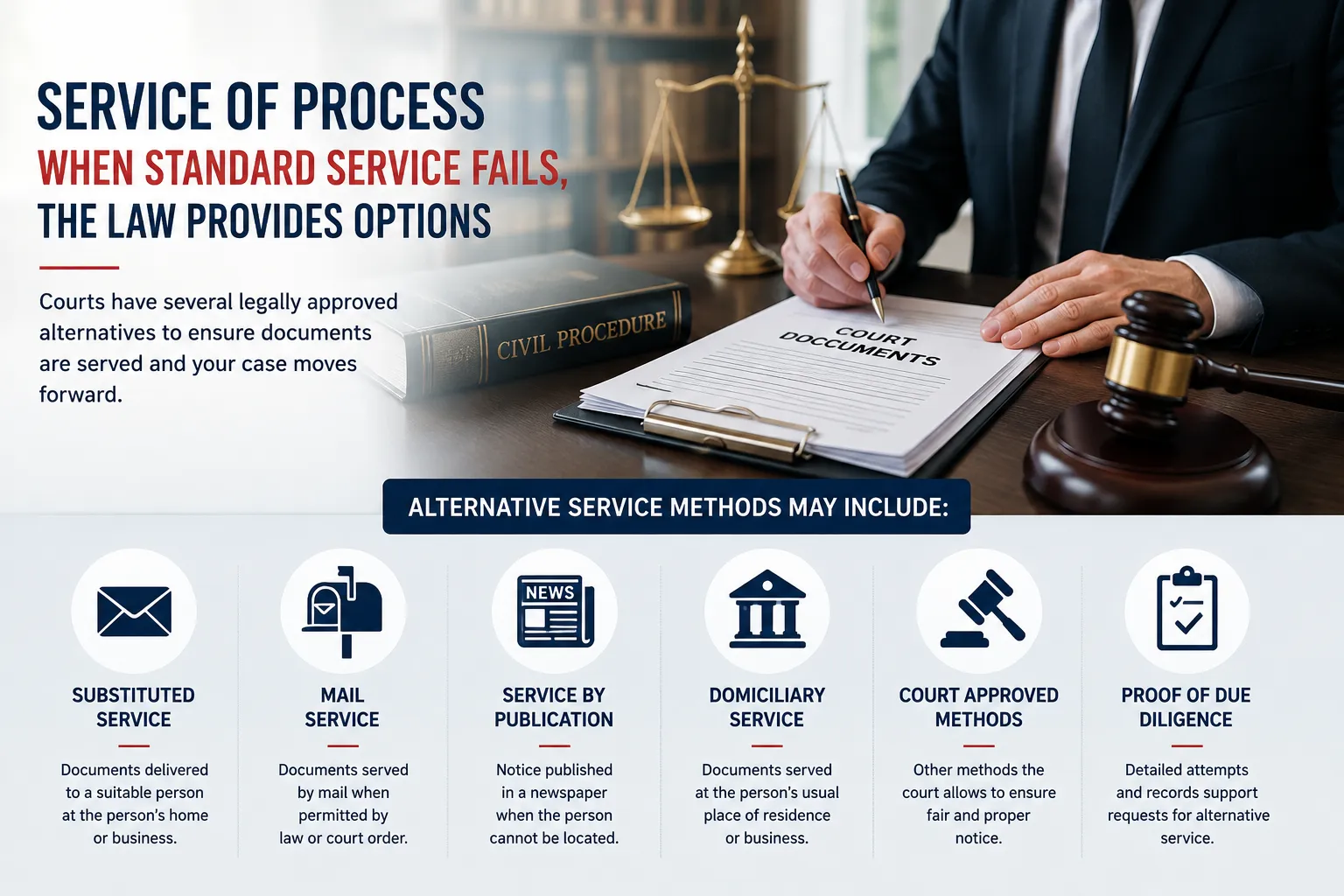
Alternative Service Methods When Personal Service Fails
If the normal service fails, alternative service methods could be offered. They could include substituted or domiciliary services, mail-in service, publication, or a different method that has been specifically approved by the courts. The permissible option is based heavily on the local law.
| Situation | The next step could be a possibility. |
| The person cannot be located. | Other attempts or alternative court-approved service |
| The individual appears to be absconding from service | The document attempts to obtain court orders and requests court directives |
| Personal delivery is not practical. | Substituted service, if permitted |
| Address is unclear | Find out if the location is correct |
| The court has approved a different method | Make sure you follow the exact court order |
What Happens If You Never Get Served Court Papers?
If you do not receive court papers, the legal consequence is contingent on the legality of service completed. Courts typically require compliance with the rules for service in force.
If valid service is provided using an alternative approved method and you do not reply to the claim, the case could be continued without your involvement. In certain civil matters, this could lead to a default judgment when the legal demands for default are met.
What Should You Do After a Failed Service of Process?
If you’re seeking to deliver documents from the court, don’t make assumptions about what constitutes an acceptable service. Review the rules of the court or consult an experienced lawyer about the particular case.
If you’re the one serving, failing to acknowledge the situation can be dangerous. Instead:
- Determine which court filed the case.
- Request a copy of the docket or documents filed in the event that they are there.
- Verify whether a deadline for response is in effect.
- Keep track of all service attempts.
- Consult a lawyer if you suspect that the service you received was unprofessional.
Knowing what happens if you avoid being served court papers can help you avoid missing an important legal deadline.
What Legal Options Are Available If Service Keeps Failing?
If repeated attempts don’t succeed, the person in need of assistance might have a number of alternatives. If the efforts are unsuccessful, the plaintiff may seek the assistance of the court to determine if a substitute or a different service is allowed.
If you think you were not adequately served, you might be able to contest the service using the appropriate court process. The procedure you can use will depend on the location and type of case and the procedural history. Since the rules for service are extremely specific, an attorney in the local area or self-help resources for the court can aid in determining the appropriate next step.
Conclusion
Knowing what happens if you avoid being served court papers will aid you in avoiding a larger issue in the future. In the event of failure, it could result in further service attempts and court-approved substituted service or other legal methods.
If you’re serving someone else, keep a record of your efforts and follow the procedures of the court. Review the court records, learn about the deadlines, and seek out legal counsel from a licensed attorney whenever needed.
Frequently Asked Questions
What happens if you avoid being served court papers?
The refusal of service is not a way to hinder the legal proceedings. The process server could try again, and the person seeking assistance may seek the court’s permission to use an alternative legal method.
Can a process server leave court papers at my door?
Sometimes, and only if the statute or order of a court allows this procedure. Rules vary by location and also by the kind of legal process; therefore, dropping papers on the doorstep isn’t always a good idea all the time.
What happens if a process server can’t serve you?
The server can document unsuccessful attempts and issue an acknowledgement of non-service.
Is avoiding a process server illegal?
The act of avoiding contact isn’t necessarily a crime; however, it doesn’t necessarily block valid service. However, abstaining from the procedure can make you vulnerable if the case is handled by another legal method.
How can I serve someone who is avoiding service?
Be sure to follow the guidelines of the court in charge of the case. If you are able to do so to obtain a ruling, you might be able to request a different or substitute service; however, the court may need evidence to prove the reason why regular service failed.
What happens if you never get served court papers?
If the service wasn’t officially completed, implications may differ from the situation where a valid alternative service took place. If you find that you are facing a legal case, review the court records quickly rather than believing that there was no service, which means that there is no case.
What is a failed service process?
A failed service of process is the attempt to provide the legal documents required to succeed in meeting the relevant requirements for service. It could lead to further attempts or the need for a different method.
Can a court allow alternative service?
Yes, courts may permit alternative services if the applicable rules allow it and the conditions are fulfilled.
What should I do if I believe I was improperly served?
Make sure you act quickly and read the court’s documents and the case file. Based on the local procedure, you may be able to contest a deficient service; however, deadlines and the remedies available vary, and a legal professional might be necessary.