If you need to serve legal documents in another country, you may have come across Hague and non Hague service. It can sound complicated at first, but the basic idea is pretty simple. The process depends on the country where the documents need to be served.
So, what changes from one country to another? And what if the country you need to serve is not part of the Hague Convention?
That is where things can get a little different.
A country that is party to the Hague Service Convention may use the Convention’s procedures for service of process involving certain legal documents, while service in a non-Hague country may be governed by local law, another treaty, or another applicable procedure.
What is the Difference Between Hague and Non Hague Service?
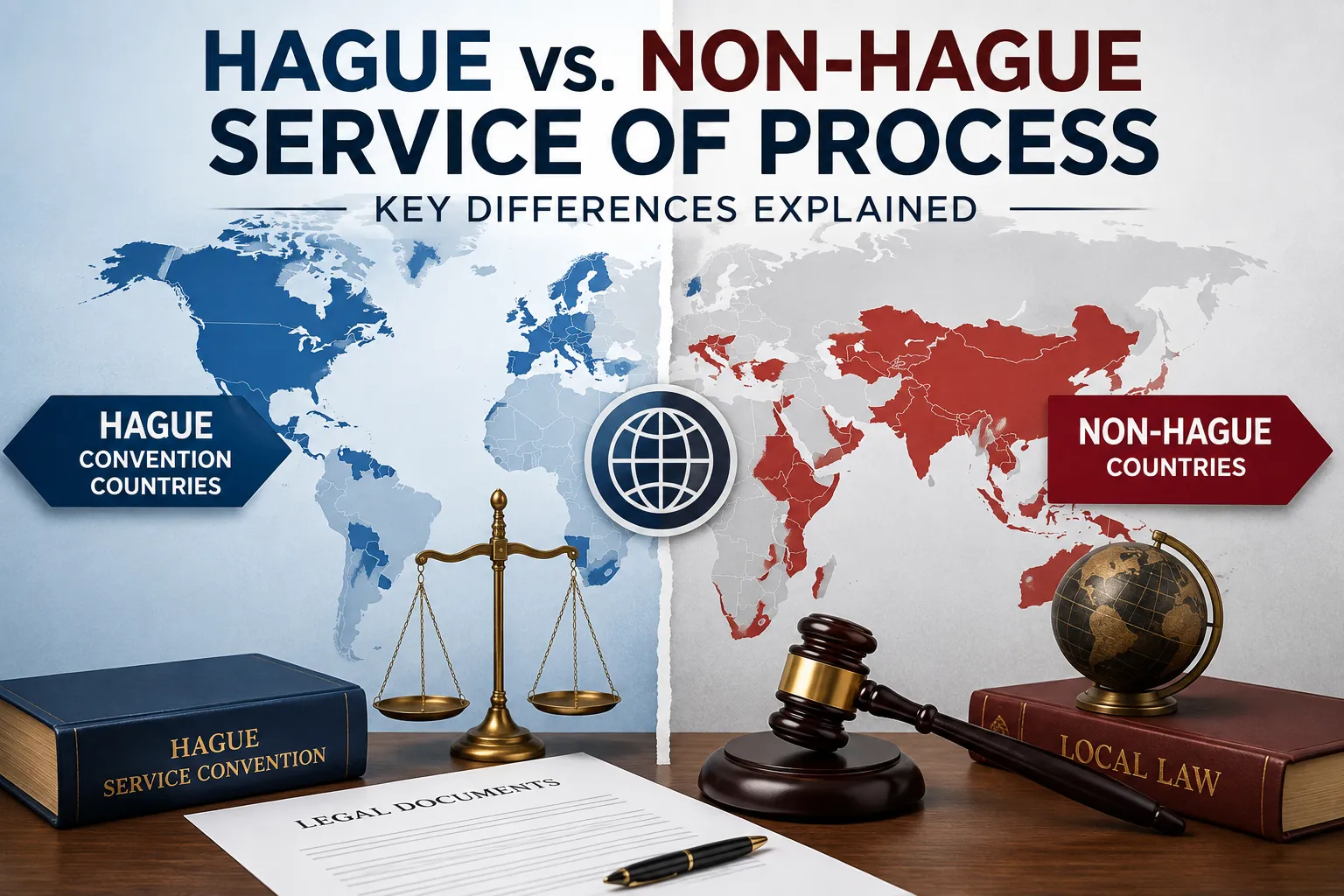
The easiest way to understand Hague and non Hague service is to look at whether the destination country is part of the Hague Service Convention.
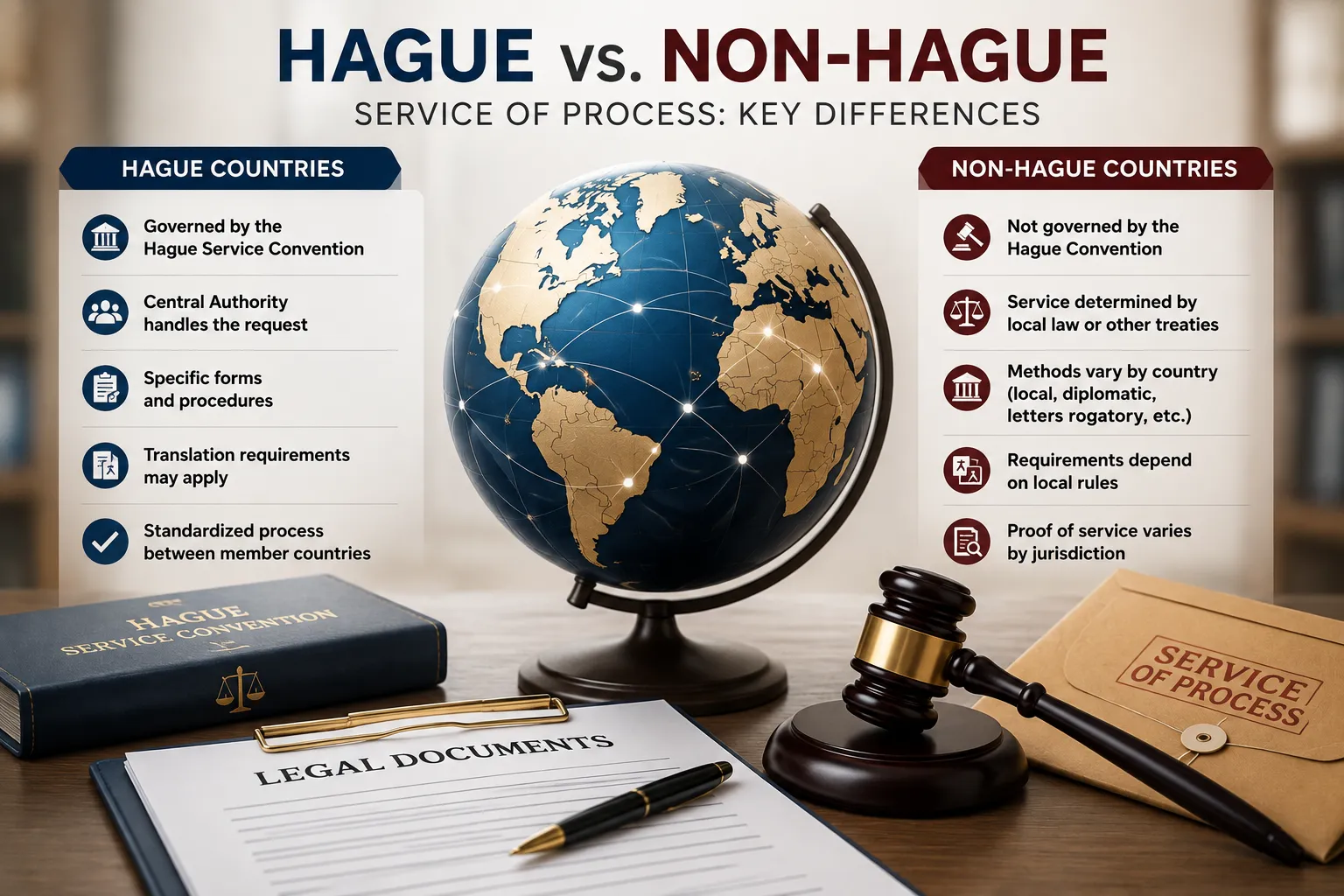
If it is, the Convention gives you an established international process for serving certain legal documents. A Central Authority may be involved, along with specific forms and other requirements.
If it is not, you cannot simply use the Hague process. Instead, you may have to check the country’s own laws or see whether another treaty applies.
So before you send anything, first find out which rules apply to that country.
What Are Hague and Non-Hague Countries?
A country that is party to the Hague Service Convention may use the Convention’s procedures for serving certain legal documents, while countries outside the Convention may follow different rules.
Non-Hague countries are countries that do not participate in it.
So, what countries are not part of the Hague Convention? Because a country’s status can change, you should verify its current participation status using an authoritative source before beginning the service process.
That quick check can save you from using the wrong procedure.
What are the Hague Convention Requirements?
When dealing with Hague and non Hague service, you will notice that Hague cases usually have a more defined process.
One common route is through the destination country’s Central Authority. Depending on the country and situation, you may need request forms, copies of the legal documents, details about the person being served, and translations.
The details matter here. If a country requires a translation and you send the documents without one, you could end up facing delays.
It is better to check the requirements first than fix the problem later.
How Do Hague Service Requirements Vary by Country?
Hague service requirements can still vary between participating countries.
For example, one country may require documents to be translated into its official language. Another may have different rules about who can complete service or which methods it accepts.
That means you should not assume that the same process works everywhere.
With Hague and non Hague service, the destination country always matters. Check its specific requirements before preparing the documents or choosing a service method.
What are Non-Hague Country Service Requirements?
Things can become less predictable with Non-Hague countries.
Because the Hague Convention does not provide the process, you usually need to start with the destination country’s local laws. These rules may tell you who can serve the documents, where service can happen, whether translation is required, and what proof you need afterward.
Another treaty could also apply, depending on the countries involved.
In short, Non Hague Convention countries do not all follow one replacement procedure. The rules can be completely different from one country to another.
What are Non-Hague Country Service Methods?
There is not one service method that works for every Non-Hague country.
Depending on the country, available service methods may include local service procedures, diplomatic channels, letters rogatory, or other methods permitted under applicable law.
Here is the part you really want to remember: just because a method worked in one country does not mean it will work in another.
Before choosing a method, check whether the destination country allows it. You should also make sure your court will accept the proof that comes from that method.
How to Serve Legal Documents in a Non-Hague Country
If you are wondering how to serve legal documents in a Non-Hague country, start with the country itself. Find out what its laws say about international service.
Then work through a few basic questions:
- Is another treaty available?
- Do the documents need to be translated?
- Who is allowed to serve them?
- Does a local authority need to be involved?
- What proof of service will you need?
- Are there additional requirements from your court?
These questions may seem like extra work, but they can prevent bigger problems later.
With Hague and non Hague service, getting the method right from the beginning can make the entire process easier.
Why Does Proper Service Matter?
Getting legal documents to someone is only part of the job. You also need to show that you served them in the correct way.
If the required procedure was not followed, the other party may challenge the service. In some cases, you could have to start the process again, which means more time and more expense.
That is why checking the rules before serving the documents is worth the effort.
You do not want to find out after the fact that your chosen method was not valid.
Hague vs. Non-Hague Service: Quick Comparison
| Hague Service | Non-Hague Service |
| Country participates in the Hague Service Convention | Country does not participate |
| Convention provides a service framework | Local law or another treaty may apply |
| Central Authority may handle the request | Local or diplomatic channels may be used |
| Specific Convention forms may be required | Requirements depend on the country |
| Translation rules may apply | Translation depends on local requirements |
The main difference is really about the rules you need to follow. Hague and non Hague services may look similar from the outside, but the steps can be very different.
Conclusion:
International service does not have to feel overwhelming. The key is knowing where the documents are going and checking the rules before you begin.
If the country is part of the Hague Convention, look at the Convention process and that country’s specific requirements. If it is not, check local law and see whether another treaty or accepted service method applies.
Taking a few minutes to check first can prevent a lot of trouble later. That is especially important when deadlines are involved.
When handled properly, Hague and non Hague service becomes much easier to understand and manage.
Frequently Asked Questions
What is the Hague Service Convention?
The Hague Service Convention is an international agreement that provides procedures for serving judicial and certain legal documents between countries that participate in the Convention.
What is the difference between Hague and non-Hague countries?
Hague countries participate in the Hague Service Convention. Non-Hague countries do not, so their service process may depend on local law or another international agreement.
What countries are not part of the Hague Convention?
Countries that do not participate in the Hague Service Convention are considered Non-Hague countries. Their current status should always be checked before beginning international service.
Do Hague countries have the same service requirements?
Not necessarily. Each participating country can have its own requirements, including rules about translations, service methods, and objections to certain procedures.
Can legal documents be served in a Non-Hague country?
Yes. Legal documents can generally be served, but the correct method depends on the destination country’s laws, applicable treaties, and court requirements.
Do documents need to be translated?
They might. Some countries require legal documents to be translated before service. The exact language requirements depend on the destination country and service method.
What are Non-Hague country service methods?
Possible methods include local service procedures, diplomatic channels, letters rogatory, or other methods allowed under the destination country’s laws.
Why is proof of service important?
Proof of service shows that the documents were delivered according to the required procedure. Without proper proof, the other party or court may question whether service was valid.
Should I check local law before serving documents?
Yes. This is particularly important for Non Hague countries because there is no Hague Convention process controlling service. Local rules may determine exactly what you need to do.
Can international service be challenged?
Yes. A party can challenge service if the required procedure was not followed. Checking the destination country’s requirements beforehand can help avoid unnecessary delays and repeat service.