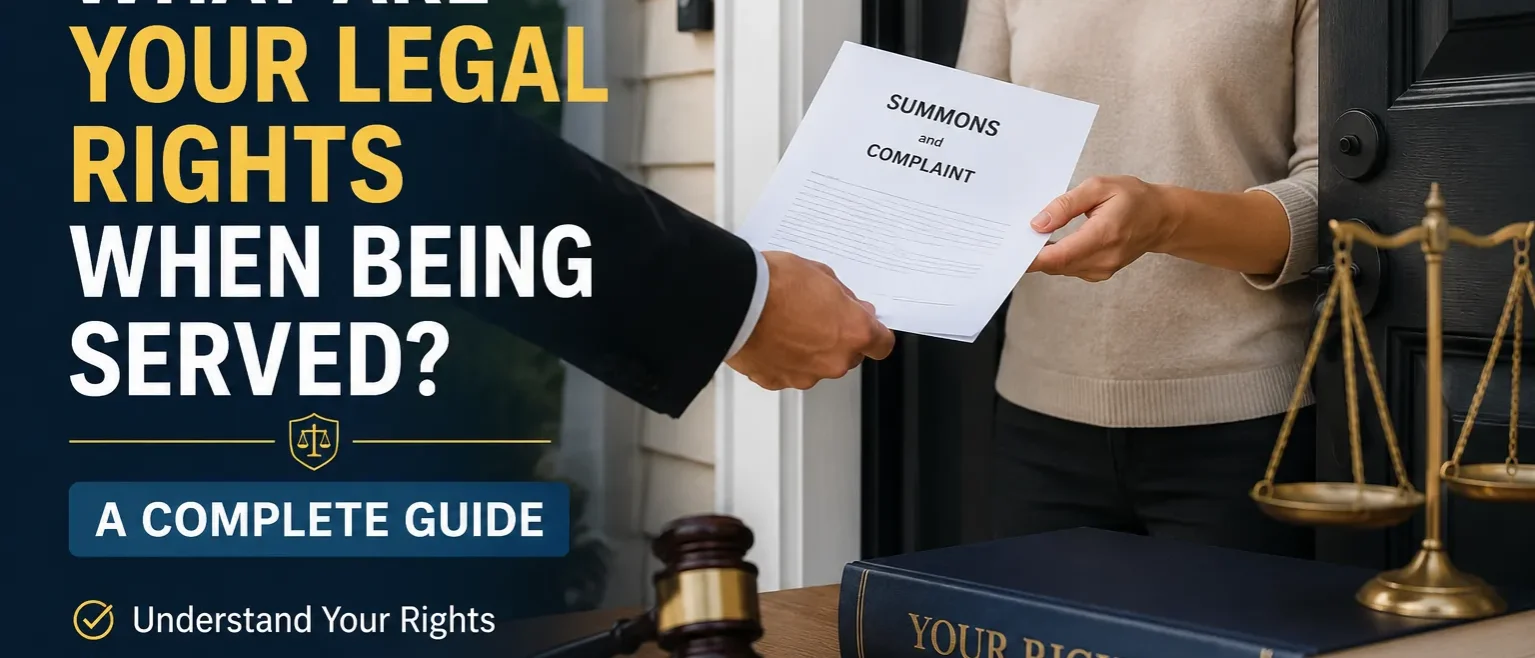
Getting handed legal papers stops you cold. One moment you’re going about your day. Suddenly, someone hands you an envelope that could change everything. Naturally, it feels stressful and confusing.
However, the concept behind being served is actually straightforward. It’s the formal process that notifies you of your involvement in a legal matter. This isn’t someone trying to scare you. Instead, the law makes sure you know what’s happening so you get a fair chance to respond.
What Does Being Served Actually Mean
Being served means you’ve received official notice. Specifically, the law requires formal notification whenever someone files a legal action against you. This requirement protects your constitutional right to due process. Without proper service of process, a court cannot move forward with a case against you.
Served papers mean more than just receiving documents, though. They signal that a legal proceeding has officially begun, and you’re now a party to it. Additionally, those papers outline your legal obligations, deadlines, and what’s at stake.
What Kind of Papers Does a Process Server Serve
It depends on the situation. Generally, process servers deliver several types of legal documents.
Summons and Complaints
A summons basically gives you a heads-up that someone’s suing you. It tells you when and where to respond. Meanwhile, the complaint spells out why they’re coming after you and what they want.
Subpoenas
This document forces you to show up in court as a witness or hand over documents as evidence. Consequently, you have no choice in the matter.
Divorce and Family Law Papers
Divorce petitions, child custody orders, and support documents also get served by process servers. Therefore, everything stays official from the start.
Eviction Notices
Similarly, landlords use process servers to start the eviction process the legal way.
Writs and Restraining Orders
These court orders tell you to stop doing something or stay away from someone. As a result, breaking them brings serious consequences.

Can Someone Refuse to Be Served
Many people ask whether they can refuse to accept legal papers. The short answer is yes, you can refuse to accept them. But here’s the catch: it usually doesn’t help you.
If you refuse to take the papers, a process server can still complete service. They can leave the documents at your feet or simply note the refusal on the service record. Many states consider this valid service. Courts have held that refusing to accept papers doesn’t prevent service when you’re aware of what’s happening.
In fact, attempting to avoid service can backfire badly. If someone cannot be located despite reasonable efforts, a court may allow service by publication in certain cases. Additionally, you could bear responsibility for the costs of multiple service attempts and skip tracing. Worse, a court could enter a default judgment against you without ever hearing your side.
Your Legal Rights When Being Served
Before you get served, it helps to understand your legal rights:
Right to notice. The law must properly notify you of any legal action against you. This is a fundamental due process right.
Right to respond. You have the right to file a response and defend yourself in court. Deadlines are strict, typically 20 to 30 days.
Right to legal counsel. You can hire an attorney to represent you, understand the documents, and protect your interests.
Right to challenge service. If service was improper, you can challenge it. However, courts generally favor finding that service was valid.
What to Do When You Get Served
Once someone serves you, take these steps right away:
Do not ignore court papers: Ignoring court papers doesn’t make them go away. Instead, it leads to default judgments against you.
Read everything carefully. Understand the nature of the case, who is suing you, and the deadlines for response.
Do not panic or argue: Stay calm. The process server is just doing their job, so emotional reactions won’t help.
Seek legal counsel immediately: Even if you think the claim is unfair, you must respond properly. Consequently, an attorney helps you file the correct response on time.
Meet the deadlines: Missing the response deadline can mean losing the case by default before you ever get to defend yourself.
Conclusion
Being served means you’ve received formal legal notification. It’s your right to know about legal action against you. While it feels overwhelming, you have rights and options. Therefore, don’t ignore it. Get legal help. Respond on time.
Frequently Asked Questions
What does being served mean in legal terms?
It means someone has officially notified you that you’re involved in a legal case. A server delivers court papers to you, letting you know you’re being sued or facing legal action.
Can someone refuse to be served papers?
You can try, but it doesn’t stop anything. If you refuse, the court can still count it as served and move forward without you.
What kind of papers does a process server deliver?
Summons, complaints, subpoenas, divorce papers, eviction notices, restraining orders, and other legal documents — basically anything official.
What should I do immediately after being served?
Read everything carefully. Check the deadlines. Don’t ignore it. And call a lawyer as soon as you can. Also, don’t try to hand the papers back or argue with the server.
What happens if I ignore being served?
You could get a default judgment against you. That means the court decides against you without hearing your side, which can lead to wage garnishment, property seizure, and other problems.
What are my legal rights when being served?
You have several rights. You have the right to be properly notified, respond and defend yourself, and get a lawyer. Additionally, if the service wasn’t done right, you can challenge that too.
How long do I have to respond to court papers?
Usually 20 to 30 days. Check your papers for the exact date. If you miss it, you could lose by default — meaning the court decides against you without hearing your side.
Does being served mean I’m guilty?
No. It just means you’re part of a legal case. It’s not an admission of anything — just official notice that something’s going on.